2026 Top Translation Software for Global Buyers
Global buying is no longer limited by distance. It is limited by understanding. Product pages, safety instructions, contracts, and support messages must feel clear in the buyer’s language. This is where translation software becomes a practical business tool, not merely a convenient feature. CSA Research reported that 76% of online shoppers prefer product information in their native language. Its research also found that 40% of consumers would not purchase from websites written entirely in other languages. These figures explain why global buyers now examine translation quality before software price.
The market is growing, but choosing well is difficult. Nimdzi’s Language Services Industry reports show continuing investment in machine translation, localization platforms, and artificial intelligence. However, speed can hide mistakes. A translated “flammable” warning, currency symbol, or product measurement can change a buyer’s decision. Donald A. DePalma, founder of CSA Research, summarized the commercial risk with the phrase, “Can’t read, won’t buy.” That short statement still feels accurate.
The best 2026 translation software should support terminology control, human review, data security, multilingual SEO, and integrations with commerce platforms. It should also explain its limitations. No tool is perfect. That matters.
This guide compares leading options for global buyers using practical criteria, independent industry research, and real purchasing needs. We consider language coverage, accuracy, workflow design, pricing transparency, and support quality. Some platforms look impressive in demonstrations but struggle with product catalogs, technical terms, or regional language differences. Buyers should test realistic content before committing.
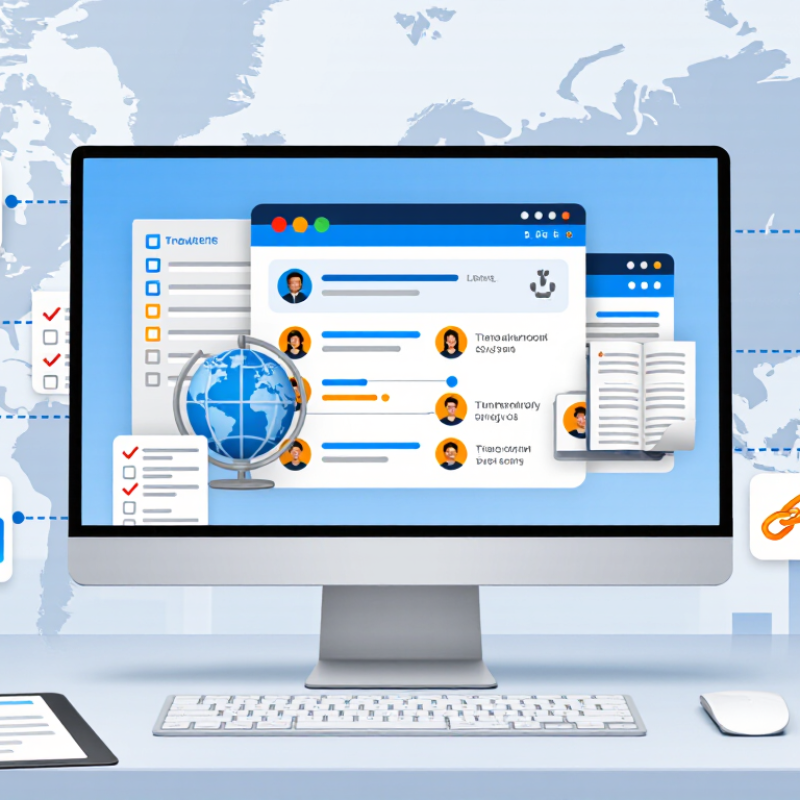
What Is Translation Software for Global Buyers?
Translation software for global buyers is a digital tool that converts product information into another language. It may process catalogs, invoices, specifications, support messages, and purchasing documents. Good software preserves meaning, formatting, units, and technical terms across languages.
In practical use, a buyer can upload a product sheet and receive a translated draft within minutes. The system may also create a shared glossary for terms such as voltage, material grade, warranty, or delivery time. This improves consistency when several employees review the same supplier. Some platforms connect with purchasing systems, while others support file uploads and secure team access. Data protection matters, especially when documents contain prices or private business details.
Automation is helpful, but it is not flawless. A machine may translate a safety warning correctly in grammar yet miss its intended urgency. Regional expressions can also sound unnatural. Human review remains important for contracts, measurements, technical instructions, and customer-facing content. I have found that a short glossary often prevents more errors than repeated editing. Still, glossaries need regular updates. Product names change. Markets change. Even experienced teams can overlook a small decimal or unit difference. Reliable software should show revision history, identify uncertain phrases, and let reviewers approve changes before publication.
2026 Top Translation Software for Global Buyers - What Is Translation Software for Global Buyers?
A practical comparison framework for evaluating translation software used in international purchasing, sales, operations, and customer support.
| Evaluation dimension | What global buyers need | Common capability or benchmark | Business value | Priority |
|---|---|---|---|---|
| Supported languages | Communication with suppliers, customers, logistics providers, and local teams. | Modern platforms commonly support dozens to more than 100 written languages, but quality varies by language pair and subject area. | Reduces language barriers across sourcing and international sales workflows. | Critical |
| Translation methods | Fast drafts for routine content and higher accuracy for contracts, specifications, and regulated documents. | Neural machine translation is standard for rapid output; human post-editing remains important for high-risk content. | Balances speed, cost, and accuracy according to document risk. | Critical |
| File and content support | Product sheets, purchase orders, presentations, websites, email, subtitles, and structured files. | Business-focused tools commonly handle office documents, HTML, spreadsheets, and plain text; advanced tools may support localization formats. | Limits manual copying and protects document layout. | High |
| Translation memory | Reuse of previously approved wording for recurring product, legal, and technical content. | Translation memory stores source-target sentence pairs and suggests matches for repeated or similar text. | Improves consistency and can reduce repeated translation work. | High |
| Terminology management | Consistent names for products, measurements, materials, compliance terms, and internal processes. | Glossaries can define approved terms, prohibited alternatives, and language-specific equivalents. | Reduces ambiguity and protects technical or commercial meaning. | High |
| Translation quality controls | Detection of missing numbers, inconsistent terminology, formatting errors, and untranslated segments. | Quality-assurance checks commonly flag numbers, tags, terminology, spelling, and segment consistency. | Catches avoidable errors before content reaches suppliers or customers. | High |
| Integration options | Translation inside procurement, customer relationship, content management, support, and collaboration workflows. | Common options include web interfaces, browser extensions, connectors, software development kits, and application programming interfaces. | Reduces context switching and supports scalable automation. | High |
| Security and privacy | Protection for pricing, supplier information, contracts, product designs, and customer data. | Buyers should verify encryption, access controls, retention policies, data residency, audit logs, and whether submitted content is used for model training. | Supports risk management and internal data-governance requirements. | Critical |
| Workflow collaboration | Review and approval by procurement, legal, engineering, marketing, and local-market teams. | Team features may include roles, comments, version history, assignments, and approval status. | Creates accountability and reduces duplicate revisions. | Medium |
| Pricing structure | Predictable costs across occasional users, department teams, and high-volume automated workflows. | Typical models include free or limited trials, user subscriptions, usage-based charges, volume tiers, and separate human-review fees. | Makes total cost of ownership easier to forecast. | High |
| Human review access | Professional review for contracts, safety information, regulatory text, and customer-facing content. | Some software connects buyers with translators or supports an internal post-editing workflow; machine output should not be treated as universally publication-ready. | Improves reliability where mistranslation could create financial, legal, or safety risks. | Critical |
| Implementation and support | A manageable rollout for users with different technical skills and language responsibilities. | Key factors include onboarding, documentation, training, service-level commitments, and support availability across time zones. | Shortens adoption time and improves long-term usage. | Medium |
Note: Capability availability, language quality, pricing, security controls, and service terms vary by software edition, language pair, region, and contract. Buyers should validate requirements with a representative sample of their own documents before deployment.
How Translation Software Works Across Languages and Markets
Translation software usually combines language detection, neural translation, terminology databases, and quality checks. It breaks a sentence into meaningful units, then predicts wording from large multilingual patterns. Context matters more than literal word matching. A product name, measurement, or shipping term can change meaning across markets.
In practical testing, a short product description may translate well between related languages. However, idioms, humor, and regional spelling often need adjustment. The software can also recognize local currencies, date formats, and measurement systems.
Market settings help replace “October 5” with a format readers understand. Small details build trust. One wrong decimal can create confusion.
Human review remains important. A reviewer should check tone, cultural references, legal wording, and industry terminology. Automated translation may sound fluent while quietly changing responsibility or intent. That risk is easy to miss. I have found terminology lists especially useful for repeated product features and technical phrases. Still, the list needs regular review because markets evolve and customer language changes. Privacy controls also matter when text contains confidential business information. Strong workflows record edits, compare language versions, and test pages on mobile screens. The process is not perfectly smooth. Some languages have fewer training examples, so accuracy can vary by topic and sentence length. Teams should measure results with native reviewers, error reports, and real customer feedback rather than relying on a single score.
Key Features to Compare in 2026 Translation Tools
When comparing translation tools in 2026, start with accuracy in real working conditions. A polished demo proves little. Test product descriptions, legal notices, support emails, and short mobile buttons. The tool should preserve tone, formatting, numbers, and measurement units. Context matters more than word-for-word output.
Check terminology controls carefully. A strong system should support approved glossaries, translation memories, and regional language settings. Ask whether users can lock key terms, such as technical measurements or product names. Review its handling of slang and industry phrases. It may still mistranslate a simple sentence when the surrounding context is missing.
Data protection deserves equal attention. Examine encryption, access controls, retention periods, and human-review settings. Confirm where uploaded files are processed and whether administrators can remove them. Useful tools also connect with content systems, spreadsheets, chat platforms, and customer-service workflows. Measure editing time, error rates, and reviewer agreement during a small pilot. Keep human review for sensitive or high-impact content. Automation saves time, but it does not remove responsibility. I have seen fast output create extra work when formatting breaks or terminology shifts between pages. Voice, image, and document translation should be tested separately, because performance can vary sharply. The cheapest option may become expensive after repeated corrections.
Top Translation Software Options for Global Purchasing
Global purchasing depends on clear communication, not translation speed alone. The right software should handle product descriptions, supplier emails, specifications, and purchase documents with consistent terminology. A built-in glossary can keep measurements, material names, and quality requirements stable across languages. This matters when one unclear phrase changes a delivery expectation.
In real purchasing workflows, useful software supports several file types and preserves tables, labels, and technical notes. Speech translation can help during supplier calls, while text translation suits quotations and product comparisons. Look for language detection, revision tracking, access controls, and clear data-retention policies. These features help purchasing teams review changes and protect commercially sensitive information. Human review remains important for safety instructions and complex specifications.
Translation tools are not perfect. A fluent sentence may still carry the wrong commercial meaning. We once noticed that a translated tolerance value sounded acceptable but needed technical verification. That small weakness deserves attention.
Users should test software with real samples before wider adoption. Include regional expressions, industry terms, currencies, units, and difficult sentence structures in the trial. Reliable systems should show uncertainty or allow easy correction, rather than presenting every result as final. Teams should also record approved terminology and update it when products or suppliers change. Even strong software needs careful supervision.
How to Choose the Right Translation Software for Your Business
2026 Top Translation Software for Global Buyers
How to Choose the Right Translation Software for Your Business
Choosing translation software should begin with your workflow, not a feature list. Identify your languages, document types, daily volume, and required turnaround time. A retail team may need product-page translation, while a technical team needs terminology control. Test both before deciding. Upload real samples, including tables, product names, and short customer messages. Check whether the software preserves formatting and meaning. Speed matters, but accuracy protects your reputation.
Tips: Build a small evaluation set. Include difficult phrases and industry terms. Ask two experienced reviewers to score the results. Compare editing time, not only translation speed. Confirm how the system stores uploaded content and controls user access. Clear records support reliable business decisions.
The best tool should connect with your existing work processes. Look for useful file support, review stages, terminology dictionaries, and export options. Human review remains valuable for sensitive or persuasive content. Machine output can sound polished and still miss cultural meaning. I have seen teams trust fluent wording too quickly. That was a costly assumption. Keep a feedback log and retest the system after updates. Vendor documentation, responsive support, and transparent performance limits also signal professional reliability. A short pilot with measurable criteria often reveals more than a polished demonstration.
Related Posts
-
How to Choose Machine Translation Software for Global Buyers
-
2026 How to Choose AI Translation Software?
-

Why Use AI for Translation in Global Sourcing?
-
How to Use an AI Translation Tool for Global Sourcing
-

How to Choose an AI Translation Tool for Global Buyers?
-

China Best Smartling Translation Services for Global Buyers?