How AI for Translation is Revolutionizing Global Sourcing?
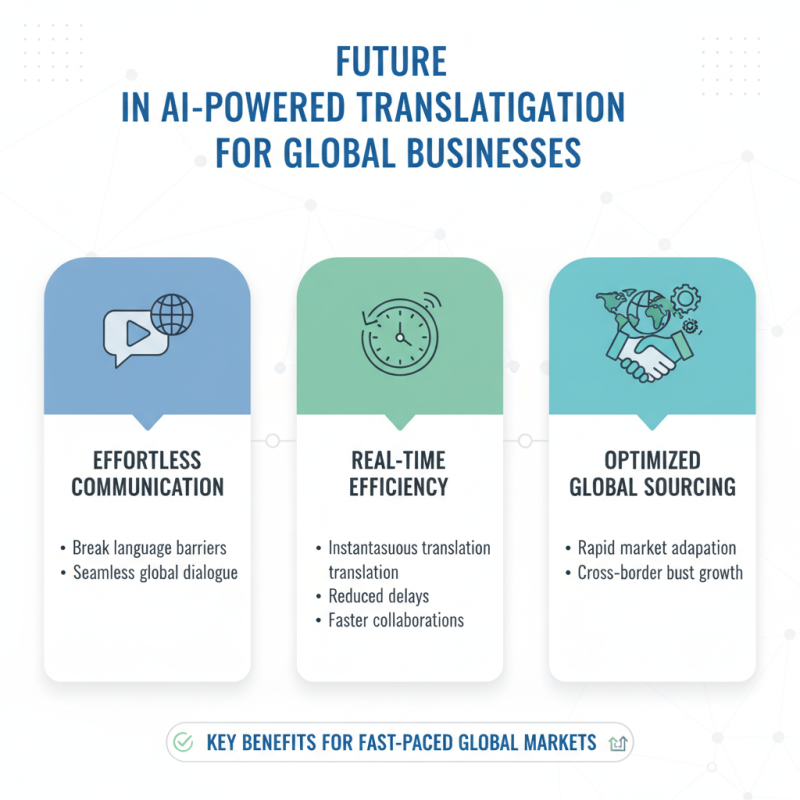
In today's interconnected world, global sourcing relies heavily on effective communication. Language barriers can hinder progress and efficiency. This is where AI for translation steps in, offering innovative solutions. By utilizing advanced algorithms and machine learning, AI for translation breaks down these barriers seamlessly.
Companies increasingly adopt AI for translation to facilitate international collaborations. The technology enhances clarity in communication, resulting in reduced misunderstandings. However, it’s not without its challenges. Relying solely on AI can lead to oversights. Subtleties in language often require human insight.
As businesses leverage AI for translation, they must balance efficiency with accuracy. Understanding cultural contexts remains crucial. While AI offers rapid solutions, maintaining authenticity in translation is vital. This ongoing evolution prompts companies to reflect on their sourcing strategies. They must blend technology with a human touch to truly thrive in a global marketplace.

The Role of AI in Enhancing Translation Accuracy
Artificial intelligence is transforming how we approach translation in global sourcing. The integration of AI in translation services has led to improvements in accuracy and efficiency. Machines can now process vast amounts of linguistic data, allowing them to recognize and translate diverse dialects and jargon used around the world. This is crucial when companies source materials from different countries. Clear communication is essential for successful negotiations and partnerships.
While AI enhances translation accuracy, it can still struggle with context. Machines often miss the nuances of language. Subtle expressions can change meaning and intent. For instance, idioms and cultural references might not translate well. Human oversight remains vital in these situations. An experienced translator can provide context that AI lacks, ensuring that the intended message is conveyed correctly.
Despite these limitations, AI continues to evolve. Ongoing improvements in machine learning and natural language processing show promise. The technology is not infallible yet, but it is learning. Companies must balance reliance on AI with human input, forming a hybrid model that leverages the strengths of both. Translation is as much about understanding culture as it is about language. Embracing AI while acknowledging its gaps can lead to more effective global sourcing strategies.
Emergence of Machine Translation Technologies in Global Sourcing
The emergence of machine translation technologies is reshaping global sourcing. Businesses are increasingly relying on AI-driven tools for translation to enhance communication and efficiency. According to a recent report by the Association for Machine Translation in the Americas, machine translation accuracy has improved significantly, boasting an average accuracy rate of over 70%. This has enabled companies to engage with suppliers from diverse linguistic backgrounds.
However, while machine translation offers quick and cost-effective solutions, it is not without its flaws. Subtle nuances and cultural context often get lost in translation. Some studies suggest that 80% of organizations reported challenges in conveying the correct tone and intent using machine translation. Real-world applications reveal that misunderstandings can arise, leading to operational hiccups. Many companies are now balancing AI tools with human oversight to ensure quality and prevent critical errors.
The reliance on machine translation is evident in industries such as manufacturing and logistics. A report by the Language Industry Associations states that global sourcing initiatives are increasingly optimizing their processes with AI language tools. Yet, the need for improvement persists. Businesses must continually assess the effectiveness of these technologies, ensuring that translation choices align with their brand’s identity and communication goals.
Impact of AI Translation Technologies in Global Sourcing
This chart represents the increasing adoption of machine translation technologies in global sourcing across various regions over the past five years. The data highlights the percentage of organizations utilizing AI for translation in their sourcing processes.
Benefits of AI Translation for Cross-Cultural Communication
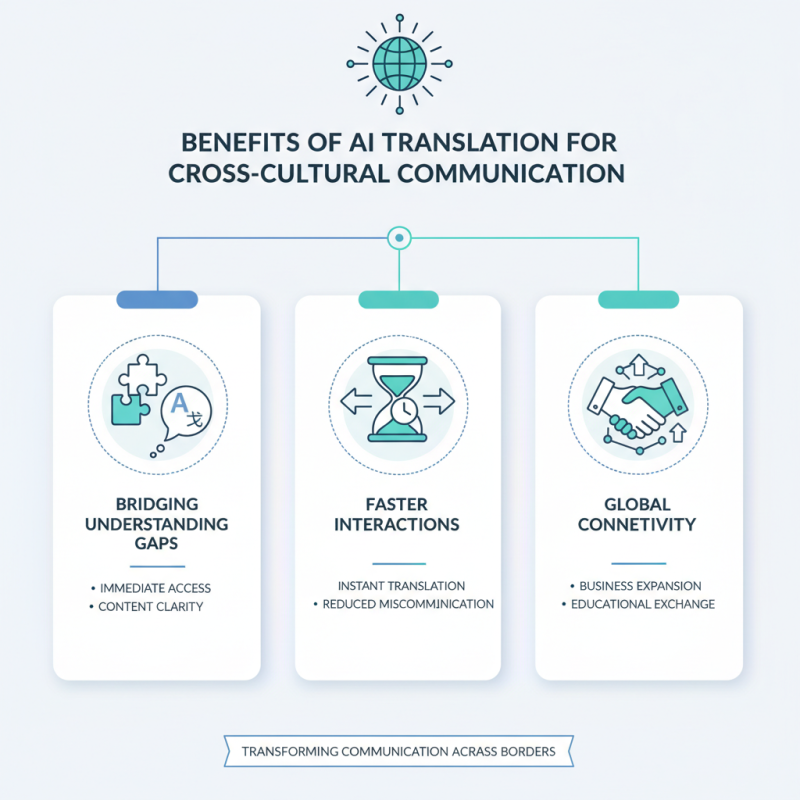
AI translation technology is transforming cross-cultural communication. This impact is felt in various sectors, from business to education. Immediate access to translated content can bridge gaps in understanding. Instant translations reduce misunderstandings. This fosters smoother interactions across borders.
As companies source talent globally, language barriers can pose challenges. AI translation offers quick solutions. However, reliance on algorithms can sometimes lead to mistakes. These errors remind us that human oversight remains crucial. While AI enhances efficiency, it may miss nuances in cultural contexts.
Furthermore, the speed of AI translation can sometimes compromise quality. This can result in awkward phrasing or unclear messages. Despite these shortcomings, the benefits of timely and accessible information are significant. Organizations must balance AI use with human expertise to optimize communication. Ultimately, AI provides a powerful tool that, when used wisely, can elevate cross-cultural exchanges.
Challenges and Limitations of AI in Translation Processes
AI has undoubtedly transformed the translation field, yet it comes with significant challenges. Machine translation can lack the nuance and cultural context humans bring. Errors can lead to misunderstandings, impacting global sourcing negatively. A recent report from the Globalization and Localization Association (GALA) found that 70% of companies still prefer human proofreading to ensure quality.
One major limitation lies in industry-specific jargon. AI struggles with technical terms in fields like legal and medical translations. Accuracy drops when phrases have multiple meanings. According to a study by the American Translators Association, 60% of translation errors arise from misinterpreted terminology. This suggests that while AI can enhance efficiency, it should not fully replace human experts.
Tips: Always double-check translated documents using a human translator. Relying solely on AI can lead to costly mistakes. Investing in quality assurance processes is crucial, especially for global operations. Balancing AI tools with human oversight can yield better results in translation accuracy.
.svg)


.svg)

.svg)


 052925 - AI Translation 101 (1).png)


.svg)

.svg)


.jpg)