10 Best Automatic Translators for Effortless Communication?
In our interconnected world, the need for seamless communication is critical. According to a report by Common Sense Advisory, 75% of consumers prefer to buy products in their native language. This demonstrates the importance of effective translation tools. Automatic translators have emerged as vital solutions to bridge language barriers.
Yet, while these tools enable effortless communication, they are not without flaws. Many automatic translators struggle with nuances and contextual meaning. A study from the European Association for Machine Translation reveals that translations can vary in quality. For instance, humor and idiomatic expressions often lose their impact. This raises questions about trust in these technologies.
Despite their limitations, the demand for automatic translators continues to grow. With approximately 500 million people using online translation services, businesses must adapt to this trend. As technology evolves, understanding the strengths and weaknesses of these tools is essential for effective global communication. Automatic translators offer convenience, but users should remain cautious of their imperfections.

The Importance of Automatic Translators in Global Communication
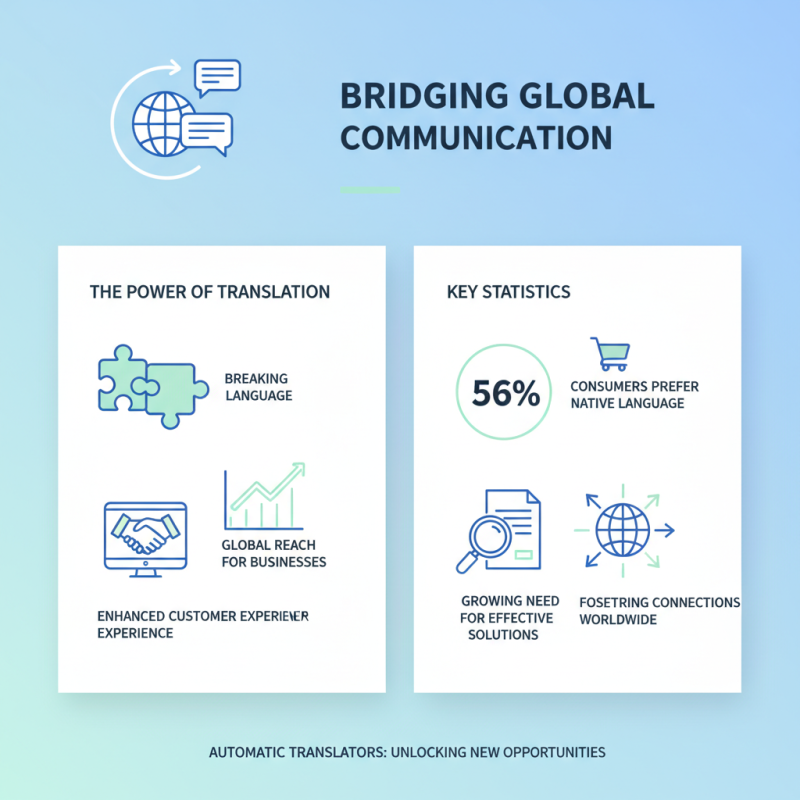
Automatic translators play a crucial role in global communication. They break down language barriers, allowing people from different backgrounds to connect. According to a study by Common Sense Advisory, 56% of consumers prefer to only buy products in their native language. This highlights a growing need for effective translation solutions. Businesses can expand their reach in international markets, enhancing customer experiences and fostering connections.
Despite advancements, automatic translators often struggle with nuance. They may misinterpret context, leading to awkward phrases or misunderstandings. For instance, idiomatic expressions can throw even the best algorithms off track. A report from the European Commission notes that nearly 30% of translation errors stem from inadequate contextual understanding. This raises concerns about relying solely on technology without human oversight.
In an increasingly digital world, the demand for automatic translation tools is rising. Research indicates that the market for these technologies is projected to reach $56 billion by 2028. Yet, consumers must remain aware of the limitations. While automatic translators empower communication, they are not infallible. A careful balance between technology and human expertise is essential to ensure accurate and meaningful interactions.
Key Features to Look for in an Automatic Translator
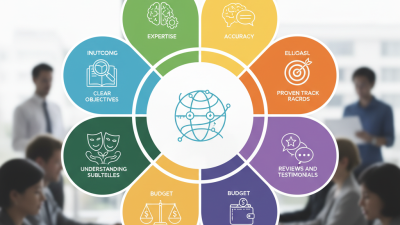
When choosing an automatic translator, consider key features that enhance communication. Look for real-time translation capabilities. This ensures conversations flow smoothly, allowing for spontaneous exchanges. A good translator should also handle different dialects. Language variations can confuse, so accuracy matters.
Voice recognition is another feature to prioritize. It allows users to speak naturally. Many people mispronounce words, leading to misunderstandings. An effective translator should adapt and correct these errors. Text translation should be quick, too. Long delays can interrupt dialogue and frustrate users.
Tips: Test translation accuracy with simple sentences first. If the app struggles, it may not be reliable for complex conversations. Always verify translations, especially in business contexts. Misunderstandings can lead to problematic situations. Ultimately, choose a tool that suits personal or professional needs. This will save time and ensure effective communication.
Performance Metrics: Speed, Accuracy, and User Satisfaction
Automatic translators have reshaped global communication. They promise speed and efficiency, enabling seamless conversations across languages. However, performance varies significantly among different tools. Users often report varying levels of accuracy, which can hinder effective communication. Certain phrases or colloquialisms frequently get lost in translation. Users must approach machine translations with care, as nuances may not always be captured.
Speed is another critical metric. Many translators offer near-instantaneous results, which is impressive. Yet, this rapid response can sometimes compromise the quality of the translation. Users may receive a quick answer but at the cost of meaningful context. Satisfaction ratings often fluctuate based on individual experiences. Some users find certain translators more intuitive, while others struggle with clunky interfaces. It's clear that while these technologies are beneficial, they are not foolproof. Reflection on these flaws is essential for improvement.
Comparison of Top Automatic Translator Apps in 2023
In 2023, the landscape of automatic translators has evolved significantly. With approximately 80% of global consumers using mobile apps for translation, the demand is soaring. Many users expect seamless, instantaneous communication. Yet, the technology is not without flaws. Users often encounter errors with nuances, idioms, and cultural phrases. These issues highlight the need for models that understand context.
Recent industry reports indicate that over 60% of users prefer applications that incorporate voice recognition and real-time conversation features. This is crucial for effective communication. However, many apps still struggle with accents and dialects.
Interestingly, users have reported feeling frustrated when translations lack accuracy. This may lead to misunderstandings or misinterpretations.
Moreover, privacy concerns also arise as translations are processed through cloud services. Users are increasingly aware that their data may not be secure. In response, many apps are working on in-device processing. Yet, the balance between privacy and functionality remains delicate. Communication is vital, and the effectiveness of these tools is under constant scrutiny.
Emerging Technologies Enhancing Automatic Translation Accuracy
Automatic translation technology is advancing rapidly. These tools use neural networks and artificial intelligence to improve accuracy. They can break language barriers effectively. Emerging technologies enhance translation precision in various ways.
One major innovation is context-based translation. This involves understanding the nuances of a phrase or sentence. Instead of word-for-word translation, context includes cultural references or idioms. For instance, humor often doesn’t translate well. A joke in one language might confuse speakers of another.
**Tips:** When using automatic translators, consider common phrases. Short, direct sentences work best. Longer sentences can lose meaning. Always double-check critical communications. It’s easy to overlook errors in automatic translations.
Another promising development is voice recognition. This technology translates spoken language in real time. It helps in live conversations, though it isn’t perfect yet. Background noise can disrupt the process. Accents and dialects also introduce challenges.
**Tips:** Speak clearly and at a moderate pace for better results. Using simple vocabulary can also aid comprehension. Remember, technology is improving but not infallible. Always be prepared to clarify if misunderstandings arise.
10 Best Automatic Translators for Effortless Communication
| Feature |
Language Support |
Accuracy (%) |
Speech Recognition |
Offline Mode |
| Text and Speech Translation |
100+ Languages |
90 |
Yes |
No |
| Contextual Translation |
50+ Languages |
85 |
Yes |
Yes |
| Instant Messaging Integration |
40+ Languages |
88 |
No |
Yes |
| Multi-device Accessibility |
30+ Languages |
82 |
Yes |
No |
| Image and Document Translation |
20+ Languages |
86 |
Yes |
Yes |
.svg)


.svg)

.svg)


 052925 - AI Translation 101 (1).png)


.svg)

.svg)


.jpg)