China Top Car Garage Lift Manufacturers and Suppliers?
Choosing a Car Garage Lift is a practical decision that affects daily workflow, vehicle access, and workshop safety. Buyers comparing Chinese manufacturers and suppliers should look beyond price and product photos. A lift must fit the vehicles being serviced, the available floor space, and the shop’s ceiling height. Small details matter. Check rated capacity, lifting height, platform dimensions, locking systems, and power requirements against the intended use. Ask how the equipment is tested and what inspection or maintenance guidance comes with it. A clear answer is more useful than a broad promise.
China has a wide range of lifting-equipment manufacturers and trading suppliers, but their experience and capabilities can differ. This guide introduces points to consider when evaluating companies, comparing lift types, and requesting quotations. Look for detailed specifications, product documentation, transparent warranty terms, and responsive technical support. Ask whether the supplier can provide installation guidance, spare-parts information, and references for similar equipment. A factory visit or video inspection may help clarify production and quality-control processes, though neither replaces careful document review. Do not assume every listing represents the actual manufacturer. That can be easy to overlook. Confirm who handles production, export coordination, and after-sales service before placing an order. No single checklist guarantees a perfect purchase, and requirements vary by workshop. Use the details in this guide to ask better questions and judge whether a supplier’s claims match your needs.
Understanding Car Garage Lifts and Their Main Types
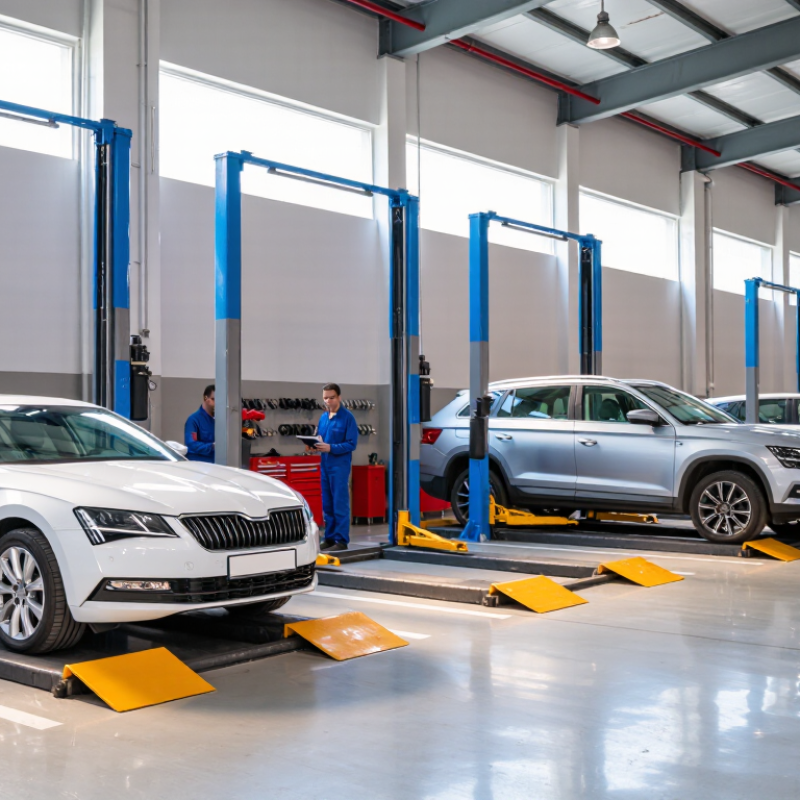
A car garage lift raises a vehicle to create access beneath it, but the right design depends on the work and the room. Two-post lifts use paired columns and swing arms to support a vehicle at designated lifting points. They leave the wheels accessible, which helps with brake and suspension repairs. Proper positioning matters. A small setup error can affect stability.
Four-post lifts support the tires on long runways. Their broad platforms can suit storage, inspections, or some service tasks, though wheel-free work may require additional equipment. Scissor lifts rise on linked platforms and often have a compact footprint. Some sit close to the floor; others need a recessed installation. Single-post lifts can save space, but their capacity and installation requirements deserve close review.
Measure more than the vehicle’s length. Check ceiling height, floor condition, doorway clearance, and the lift’s rated capacity against the vehicles you expect to service. A lift that fits on paper may still obstruct lights or leave too little room to open a door. Read the installation and operating instructions, and have the supporting structure assessed when required. In practice, choosing the cheapest or smallest option can be tempting. It is not always the sensible choice.
How China’s Garage Lift Manufacturing Industry Is Organized
China’s garage-lift manufacturing industry is organized as a supply chain, not a single factory category. Steel processors and hydraulic-component suppliers provide columns, cylinders, pumps, and safety locks. Specialized manufacturers then assemble two-post, four-post, scissor, or in-ground lifts. Some handle design and production; others rely on contract machining or outsourced components. The distinction matters when checking consistency between batches.
Demand sits within a large vehicle-service market, but vehicle sales alone cannot measure lift demand. The China Association of Automobile Manufacturers reported 31.436 million vehicle sales in 2024. That scale supports ongoing repair and maintenance needs. It does not prove how many lifts were installed. Buyers should compare rated capacity, lifting height, synchronization, and documented load-test procedures, rather than infer quality from production volume.
Downstream, domestic distributors and export-oriented suppliers connect factories with workshops, installers, and service networks. Larger projects may require site measurements, floor-strength checks, installation, and operator training. Ask who performs each task. A supplier’s catalogue may not reveal whether it controls critical processes, such as weld inspection or hydraulic testing. This industry map is useful, but incomplete: public reports rarely separate garage-lift output from broader lifting-equipment statistics. That gap deserves attention.
Profiles of Leading Chinese Car Lift Manufacturers and Suppliers
Chinese car lift manufacturers serve repair shops, dealerships, inspection centers, and equipment distributors. Their profiles vary: some focus on two-post lifts for routine servicing, while others produce scissor lifts for alignment bays or low-ceiling garages. A supplier’s catalogue can look broad, but practical capability shows in the details. Ask how the lift’s rated capacity is tested, what floor conditions installation requires, and whether operating manuals include clear maintenance intervals.
Details matter.
Some manufacturers emphasize in-house fabrication and assembly; others coordinate production through specialist workshops. Neither model guarantees quality on its own. Request drawings, inspection records, spare-parts lists, and installation guidance before comparing quotations. For a two-post model, examine the arm-lock design and the space needed to open vehicle doors. For a scissor lift, check platform dimensions and access for servicing beneath the vehicle.
Ask for evidence.
A video of a loaded lift moving smoothly is useful, but it cannot replace documented test results. Export experience may help with packaging and communication, yet response times and after-sales support should be checked directly. One imperfect detail often gets missed: delivery schedules can change when custom dimensions are involved, so confirm them in writing.
How to Evaluate Supplier Quality, Certifications, and Product Range
When comparing car garage lift manufacturers and suppliers in China, look beyond price and catalog photos. Request drawings, rated-load specifications, installation instructions, and maintenance schedules. Check that the documents describe the exact model you plan to buy. A certificate is useful only when its scope and issuing details can be verified.
Details matter. Ask how the supplier tests load capacity, emergency locks, and hydraulic components. If possible, review inspection records and speak with customers who use similar lifts. Tips: Send the same questions to several suppliers. Compare response times, document quality, warranty terms, and spare-parts availability. Vague answers deserve follow-up.
Product range should fit your workshop, not just look broad. Compare lift type, ceiling clearance, vehicle size, power supply, and service access. Ask whether replacement parts can be identified by model and supplied consistently. A polished catalog can still hide gaps between listed features and actual configurations. Suppliers may also need time to confirm unusual requirements, so allow room for verification rather than relying on a quick promise.
Export, Installation, and After-Sales Service Considerations
When comparing car garage lift manufacturers and suppliers in China, look beyond the quoted price. Before ordering, confirm platform dimensions, lifting capacity, power requirements, and the installation space. Ask for drawings and packing dimensions; a lift that fits the workshop may still be difficult to unload. Export documents, protective packing, and agreed delivery terms should be clear in writing. Small details matter.
Installation planning starts before the equipment arrives. Check the floor’s condition and thickness against the supplier’s technical requirements, and confirm who provides qualified installation support. Ask whether commissioning includes safety-device checks, operating instructions, and staff training. A remote video call can help, but it cannot replace an on-site assessment when conditions are uncertain. This part is easy to underestimate.
After-sales service should be specific, not just a promise of support. Request written warranty terms, a spare-parts list, and a clear process for reporting faults. Confirm typical response times and whether troubleshooting is available in your time zone. Keep installation records, inspection notes, and contact details together. Delays can happen. A missing small component can still hold up a busy workshop, so check parts availability before shipment.
China Car Garage Lift Suppliers: Typical Rated Capacity Ranges
These representative capacity ranges vary by model and supplier; verify the lift nameplate, certifications, installation requirements, export documentation, and local after-sales support before ordering.