2026 How to Choose the Best Localization Software for Your Business?
In an increasingly globalized market, choosing the right localization software is essential for success. Localization software helps businesses adapt their content for diverse audiences. It ensures that language, culture, and context align. However, finding the best fit can be challenging. Different tools offer various features and pricing.
Consider your specific needs before making a choice. Does your business focus on numerous languages? Or is it centered in a particular region? Some software excels in translation management, while others prioritize user experience. You may also want to reflect on scalability. What works today might not suffice tomorrow.
Exploring options often uncovers complexities. Don't overlook customer support and integration capabilities. Each choice carries its own pros and cons. This process requires thoughtful consideration to avoid potential pitfalls. Take your time to analyze and compare. The right localization software will enhance your business and enable you to connect with customers globally.

Understanding the Importance of Localization Software in Business
Localization software plays a crucial role in global business success. Companies aim to reach diverse markets, and effective communication is key. This software helps translate content, adapt cultural nuances, and ensure that messages resonate with local audiences. It can save time and resources, allowing businesses to focus on growth.
Tips: Choose software that supports multiple languages. It's vital to check the language options offered. Flexibility is another factor; your needs might change as your business evolves. Keep the user interface in mind. A complicated system can slow down the process.
When selecting localization software, consider the features you need. Integration capabilities matter. You want tools that work well with your existing systems. Seek out platforms that offer strong support. If issues arise, you need quick resolutions. A lack of support can lead to delays and frustration. Not all solutions are perfect; think about what works best for you.
Key Features to Look for in Localization Software
Choosing the right localization software is critical for effective international growth. The most important features should include translation efficiency, ease of use, and integration capabilities. Research indicates that over 70% of global consumers prefer content in their native language. This makes user-friendly software essential, as it directly impacts customer engagement.
Another crucial aspect is collaboration tools. Many localization projects involve multiple stakeholders. Statistics show that teams using collaborative features see a 40% increase in productivity. This suggests that clear communication and task management can enhance efficiency. However, not all software provides robust collaboration options. Businesses must evaluate if these functions meet their specific needs.
Additionally, consider scalability. As your business expands, your localization needs will evolve. A report from a leading industry agency indicates that 60% of companies struggle with adapting their localization processes during growth phases. This highlights the importance of choosing flexible solutions that can grow with your business. Failure to do so may result in missed opportunities in emerging markets.
Assessing Your Business Needs for Localization Solutions
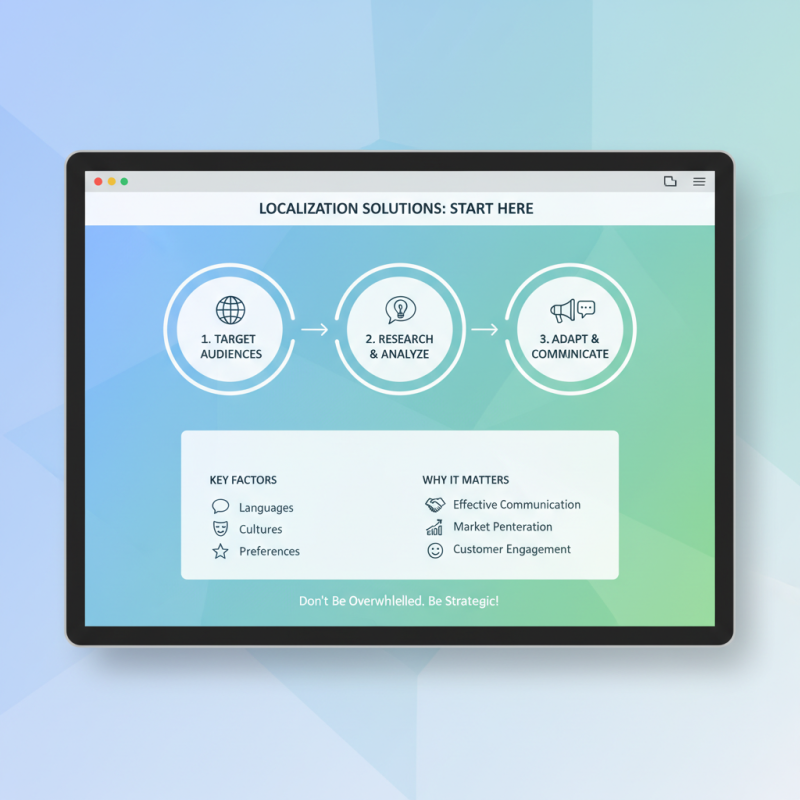
When assessing your business needs for localization solutions, start with a clear understanding of your target audiences. Different markets may require unique approaches. Analyze the languages, cultures, and preferences of these groups. It may feel overwhelming, but it’s crucial for effective communication.
Tips: Identify the key languages that resonate with your customers. Consider hiring local experts who understand cultural nuances. This can prevent costly mistakes.
Next, look at your existing content. Is it ready for localization? Assess if your materials have a flexible structure that allows translation. Avoid cluttered formats or complex terminology, as these can hinder the process.
Tips: Create a style guide. Keep your language simple and consistent. Test your content with native speakers to identify any unclear phrases or concepts. Their feedback can guide your adjustments.
Lastly, think about your budget and resources. Localization can be an ongoing process, not a one-time task. Regularly revisit your strategy to ensure it aligns with evolving business goals. This reflection can lead to unexpected improvements.
Tips: Plan for updates and revisits to your content. Track your localization ROI to see what works and what doesn’t. This insight can refine your approach.
Comparing Different Localization Software Options on the Market
Choosing the right localization software is crucial for businesses aiming to expand globally. The market offers various options, each with unique features. Some tools focus on
website localization while others excel in software or app translation. Assessing your specific needs is essential before diving into software comparisons.
When comparing tools, consider user interface and ease of use. A complicated system may hinder productivity. Some software might not support all languages, limiting your global reach. It's disheartening to find out after choosing a tool that it doesn't cover your target markets. Additionally, pricing structures vary. Some options may seem affordable at first but have hidden costs that appear later.
Integration capabilities should not be overlooked. A solution that doesn’t mesh well with your current systems can lead to frustration. Some businesses face challenges with customer support and resources offered. Evaluating user reviews can provide insight, but don’t rely solely on them. Each company has unique requirements, and what works for one may not suit another.
Careful consideration is essential.
Evaluating Pricing and Support Options for Localization Tools
When choosing localization software, pricing and support options play a critical role. Evaluating the cost is more than just looking at the sticker price. Consider the features offered at each price point. Some tools might seem affordable but could lack essential functions. Look for hidden costs, such as additional fees for updates or extra users. It’s easy to overlook these details, but they can affect your budget.
Support options are equally important. A good software tool should offer comprehensive support. Consider whether they provide 24/7 assistance or just business hours. You may need help during off-hours or urgent projects. Also, check if documentation is clear and accessible. Some tools might have confusing manuals, making it harder to solve issues. User reviews can offer insights into the quality of support from other users. That might help you avoid tools with poor service.
Ultimately, it's essential to balance pricing with the quality of support. Sometimes, a cheaper option can lead to frustrations. Taking the time to evaluate these aspects will save you time and effort later. Investing in a tool that offers both a fair price and strong support can make a significant difference in your localization process.
.svg)


.svg)

.svg)


 052925 - AI Translation 101 (1).png)


.svg)

.svg)


.jpg)