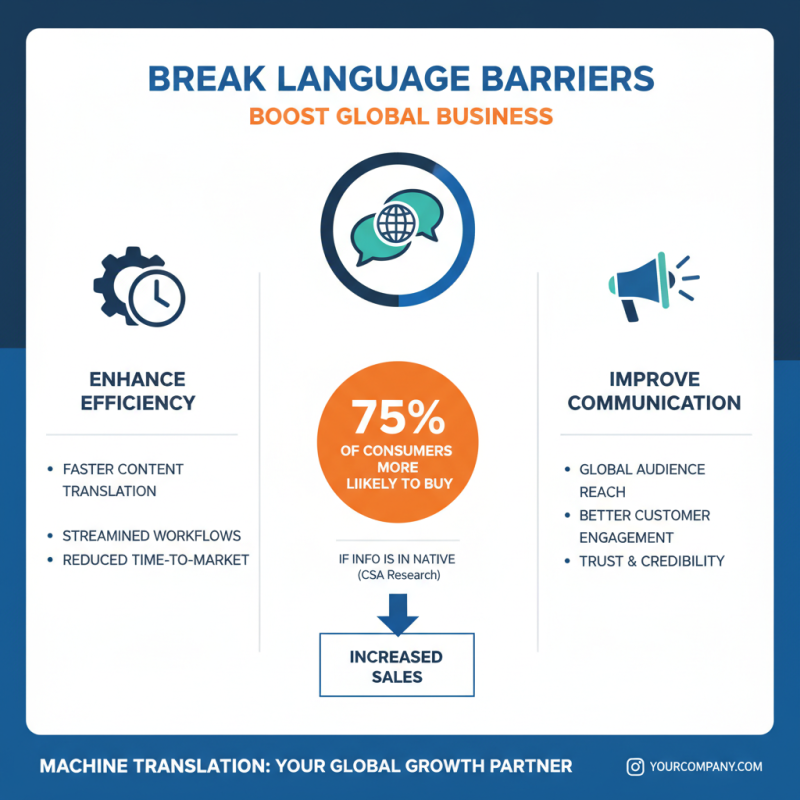
Why Choose Machine Translation Software for Your Business Needs?
In today's fast-paced global marketplace, businesses face unique challenges. One major hurdle is effective communication across languages. Machine translation software has emerged as a vital tool in overcoming this barrier. According to Dr. Anna Smith, an industry expert in translation technologies, "Machine translation software allows companies to scale their communication efforts without losing quality."
Integrating machine translation software can streamline operations. Businesses can expand their reach efficiently. These tools can translate documents, websites, and customer interactions in real-time. However, it is essential to remember that machine translation isn't perfect. The nuances of language and context can sometimes be lost. Companies need to weigh the benefits against potential miscommunications.
Investing in machine translation software can lead to significant advantages. But, it's critical to review and refine the output. Continuous assessment can ensure better results in the long run. In a world that values quick and clear communication, finding the right balance is crucial for success.

Benefits of Machine Translation Software for Business Efficiency
Machine translation software can significantly enhance business efficiency. A recent report indicates that companies using machine translation reduced their translation costs by up to 70%. This reduction allows businesses to allocate resources to other important areas. Speed is another critical factor. Machine translation can deliver results in minutes, while traditional methods take days or even weeks. Fast turnaround times can be crucial in today’s fast-paced market.
However, reliance on machine translation is not without challenges. Quality can vary, leading to misinterpretations. A study found that 29% of businesses experienced issues with inaccurate translations. This highlights the need for a robust quality control process. Companies should be aware that nuances in language may get lost in translation, which can affect the brand's message.
Investing in machine translation software can provide numerous benefits, but businesses must use it wisely. It’s essential to continually assess the output. Balancing speed and accuracy is key. Incorporating human review helps maintain the quality of translations while leveraging the benefits of speed and cost savings.
Benefits of Machine Translation Software for Business Efficiency
Key Features to Consider When Choosing Translation Software
Choosing the right machine translation software is crucial for your business. Many features can enhance your translation experience. Focus on user-friendliness. A simple interface saves time and reduces frustration. Look for personalization options too. Customizable features cater to your unique needs.
Consider integration capabilities. The software should easily connect to your existing systems. This allows for seamless workflow. Efficient integration increases productivity. It is frustrating when systems do not work together. Check if the software supports various file formats as well. Compatibility is key for handling diverse content.
Tips: Test several tools before deciding. Many software options offer trial periods. Use this time to explore features. Evaluate their performance on real projects. Also, consider the software's learning capability. The best translation software improves over time. This can save you from frequent revisions later.
Cost-Effectiveness of Machine Translation Compared to Human Translators
Machine translation software offers significant cost advantages for businesses. Utilizing this technology can drastically reduce expenses related to translation services.
Human translators often charge high rates, especially for specialized content. In contrast, machine translation can provide quick and effective translations at a fraction of the cost.
This makes it an attractive option for companies with tight budgets.
While machine translation might seem ideal, there are limitations. The software sometimes struggles with nuanced phrases or cultural context.
Accuracy can falter in complex documents. A business might save money initially but could face consequences later.
Misinterpretations can lead to miscommunication and damage to brand reputation. It's essential to weigh these risks against potential savings.
Investing in machine translation can transform how companies communicate globally. It enhances efficiency and speed. However, it begs reflection on quality control.
Regular assessments of translation output might be necessary. Balancing cost and accuracy is crucial for long-term success. Businesses should proceed thoughtfully in adopting these tools.
Ensuring Quality and Accuracy in Machine Translations: Best Practices
Machine translation software has emerged as a vital tool for businesses navigating global communication. However, ensuring quality and accuracy remains a challenge. According to a report by the Globalization and Localization Association (GALA), 75% of companies experience issues with accuracy in their translations. This underscores the importance of implementing best practices for effective machine translation.
Tips: Always review translations for context. A literal translation may not convey the intended meaning. For instance, idioms often don't translate well. Work with bilingual experts for critical content.
The use of advanced algorithms can improve translation quality. Nonetheless, reliance on these systems without human input can lead to misunderstandings. A study from the University of Cambridge found that 30% of machine translations contained significant errors when left unchecked. Businesses should regularly evaluate translation outputs for precision and clarity.
Tips: Establish clear guidelines for machine translations. Define terminology and preferred styles upfront. This can minimize discrepancies in future translations, resulting in a more cohesive brand voice across different languages.
.svg)


.svg)

.svg)


 052925 - AI Translation 101 (1).png)


.svg)

.svg)


.jpg)