How to Choose a Cinema Chair Manufacturer in 2026?
Choosing a Cinema Chair Manufacturer in 2026 is not just a matter of comparing catalog photos. A seat must withstand repeated use, fit the room’s sightlines, and remain comfortable through a long film. Small details matter: armrest width, cup-holder placement, upholstery seams, and how quietly a seat folds. One loose hinge can be noticed across a quiet auditorium.
Industry data offers useful context, but not a shortcut. Cinema United’s 2024 THEME Report put worldwide box office revenue for 2023 at about US$33.9 billion, showing the scale of the exhibition business as audiences returned. UNIC’s 2024 Annual Report also tracks cinema admissions and box-office performance across European markets. These reports describe the market, not chair durability. That distinction matters. A strong industry forecast cannot prove that a particular model will last.
A practical supplier review should therefore connect specifications with evidence. Ask for load and cycle-test results, warranty terms, replacement-part availability, and references from venues with similar layouts. Request a sample, then check its movement, stitching, and cleanability under ordinary conditions. Compare lead times and installation support, too; a low quote can become less attractive if parts take months to arrive. Not everything is measurable. Comfort varies by audience, and a showroom test may not reveal problems after a busy weekend. Treat claims carefully, record unanswered questions, and choose a manufacturer willing to explain both strengths and limitations.
Define Your Cinema Seating Requirements
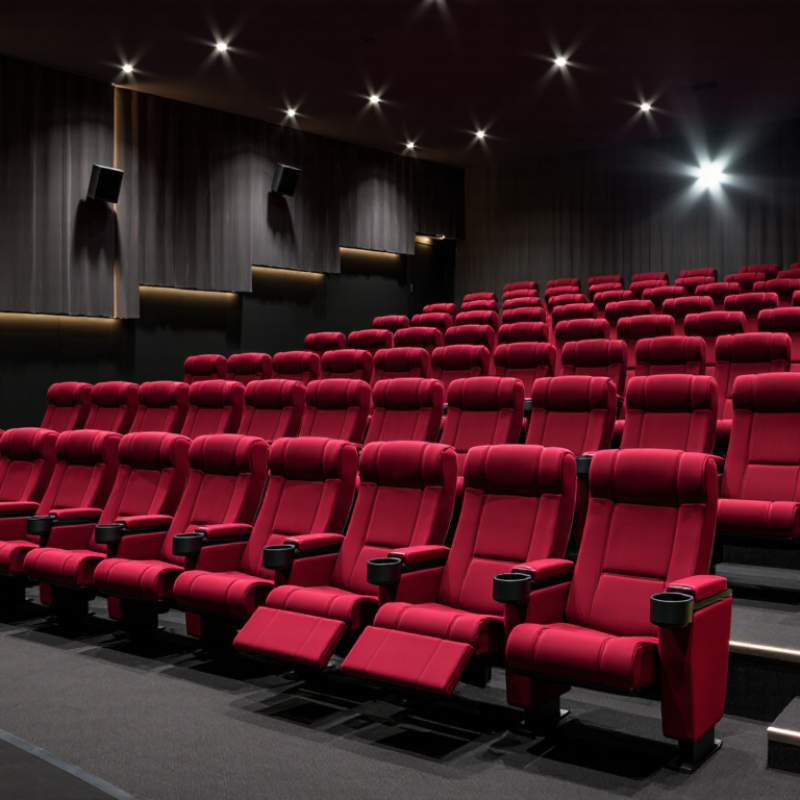
Define your cinema seating requirements before comparing manufacturers. Start with the room, not the chair. Measure usable width, row depth, aisle locations, and access routes, then account for screens, doors, and wheelchair spaces. A seating layout that looks generous on paper may feel cramped once people recline and pass one another. Comfort is measurable. Check seat width, back support, armrest shape, and recline range against the audience and show length your venue expects. For family screenings, easy-clean surfaces may matter more than deep cushioning. For premium rooms, quiet mechanisms and generous legroom may be worth the floor space.
Write down operating needs, too. Note expected daily use, cleaning routines, replacement-part access, and how quickly a damaged seat must be repaired. Ask manufacturers for material specifications, load-test documentation, warranty terms, and a sample seat you can inspect. Sit in it. Test the recline, listen for noise, and check whether cup holders are reachable in a dark room. If possible, mock up one full row with the planned pitch. Even a careful plan can miss something: staff may need more clearance for cleaning carts, or a preferred fabric may show wear sooner than expected. Treat those details as requirements, not afterthoughts. A clear brief helps suppliers propose seating that fits the room and its real use.
Compare Manufacturer Experience and Production Capabilities
When choosing a cinema chair manufacturer, compare proven project experience with the production systems behind it. The Motion Picture Association’s 2023 THEME Report recorded a global box office of $33.9 billion. That scale makes reliable seating important in busy venues, where a loose armrest or delayed replacement can affect daily operations. Ask for references from cinemas with similar capacity and seating layouts, not just attractive showroom photos.
Then inspect how the chairs are made. Can the factory show its frame welding, upholstery work, foam shaping, and final inspection? Ask how it checks seat movement, stitching, finish consistency, and batch records. The 2024 Deloitte and Manufacturing Institute report projected 3.8 million U.S. manufacturing jobs would be needed by 2033, with 1.9 million potentially unfilled. This is not a cinema-chair forecast, but it highlights why staffing and realistic lead times deserve attention. A factory tour can still flatter reality. Request a production sample and a written schedule.
Tip: Ask the manufacturer to explain its monthly output, peak-season capacity, quality checks, and spare-part process. Compare answers with a recent project record. Specifics matter. A confident answer is useful; verifiable evidence is better.
Assess Chair Design, Materials, and Safety Standards
When comparing cinema chair manufacturers, inspect a full-size sample rather than relying on catalog images. Check seat depth, back angle, and armrest width against the room layout and intended audience. Sit in the chair for several minutes; a seat that feels plush at first may offer poor support during a long film. Comfort is measurable. Ask how the design handles different body sizes and whether the seat returns smoothly without slamming.
Look closely at the materials where wear starts: seat edges, stitching, hinges, and exposed metal joints. Ask for upholstery specifications, foam density, and cleaning guidance, then test a sample with the cleaners used at your venue. Foam should regain its shape after pressure, and seams should stay even under repeated movement. A polished finish can hide weak details. This is easy to overlook when deadlines are tight.
Safety claims need documentation. Request current test reports for structural durability, upholstery flammability, and any applicable anchoring or aisle-clearance requirements. Requirements vary by location and project, so confirm them with the venue’s qualified design or safety professionals. Check that reports identify the tested materials and model; a certificate for a similar chair may not apply. Ask how production batches are tracked and how defects are handled. A careful supplier should answer plainly, though paperwork alone cannot reveal every problem. Examine a production sample, too.
Verify Quality Control, Delivery, and After-Sales Support
Choosing a cinema chair manufacturer in 2026 means checking how claims hold up on the factory floor, not just comparing brochures. Ask for written inspection steps covering frame welds, foam density, upholstery seams, recliner cycles, and seat numbering. Request recent test records and a sample chair made with your specified fabric and mechanism. Look for measured results, dates, and corrective actions—not just a polished certificate. Small details matter. Test repeated recline cycles, listen for clicking, check that armrests stay firm, and inspect stitching around high-friction edges. A checklist helps, but it cannot catch everything.
Delivery deserves equal scrutiny. Confirm production capacity, packing methods, shipment milestones, and how delays are reported. Ask how cartons are labeled and whether spare parts can ship with the order. A realistic schedule should include inspection and transit buffers; a promised date alone is weak evidence. After-sales support should specify response times, warranty exclusions, replacement-part availability, and how to document a fault. Clarify who pays freight for approved parts and how claims are tracked. Keep photos, batch numbers, and installation notes. Terms may seem clear until a seat fails months later. Verify them before signing. A dependable supplier makes problems traceable, even when the answer is not immediate.
Evaluate Proposals and Choose the Best-Fit Manufacturer
How to Choose a Cinema Chair Manufacturer in 2026?
Compare proposals against the same seat plan, not just the quoted unit price. Check seat width, row spacing, aisle-end details, and how the chairs attach to the floor. Ask for fabric specifications, foam details, warranty terms, and written production and delivery schedules. A sample chair can reveal stitching, cushion firmness, and noise that a proposal cannot. Small details matter.
Tips: Request an itemized quote. Confirm what packaging, installation guidance, and spare parts are included. Ask for relevant test documents, then check that they match the materials and chair model being offered. Keep answers in writing.
The best-fit manufacturer is the one whose proposal suits your venue and can explain its assumptions clearly. Compare total project costs, including freight, installation, and likely replacement parts. Ask how design changes affect price and lead time. A polished presentation is useful, but it is not proof of reliable production. I would also speak with a recent customer, if possible, and ask about delays or after-sales support. That step can be awkward. It is still worthwhile. A low quote may be right for a simple project, but a complex layout may need better coordination and clearer quality checks.
How to Evaluate Cinema Chair Manufacturer Proposals
This chart shows suggested scoring weights for comparing proposals—not market survey results. Apply the same criteria to every manufacturer, and verify claims using documents such as test reports, warranty terms, sample inspections, and delivery schedules.
.svg)


.svg)

.svg)


 052925 - AI Translation 101 (1).png)


.svg)

.svg)


.jpg)