How to Choose the Best Translation Software for Your Needs?
Choosing the right translation software can significantly impact your workflow and final output. Renowned expert in localization, Dr. Sarah Thompson, once stated, "The best translation software should cater to the specific needs of its user while ensuring accuracy and efficiency." This highlights the importance of personalized options amid a plethora of software choices available today.
In a market flooded with translation tools, it’s vital to evaluate your specific needs. Some tools excel in simplicity, while others offer advanced customization. Without a clear understanding of your requirements, you might end up with software that hampers productivity rather than enhancing it. It's common for users to focus solely on features, overlooking considerations like user interface and support.
Furthermore, it's essential to recognize that no translation software is perfect. Every tool comes with its limitations, and some may require a learning curve. Balancing features with usability should guide your decision. Reflecting on past experiences can help identify what worked and what did not in your previous software choices. Therefore, thoughtful selection is key to finding the translation software that truly fits your needs.

Factors to Consider When Selecting Translation Software
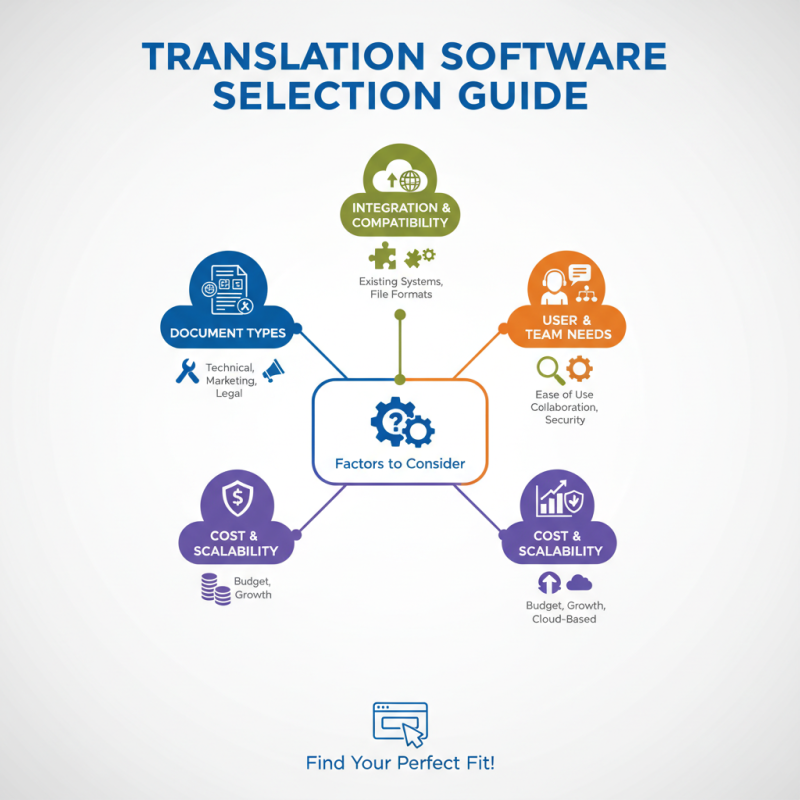
Choosing the right translation software can be overwhelming. Many factors influence your decision. Start by identifying the types of documents you will translate. Are they technical manuals, marketing materials, or legal documents? Each type has different requirements.
Consider the user interface. A clean, intuitive design can significantly enhance your efficiency. If the software is hard to navigate, mistakes can happen. Test the software before committing. A trial version can reveal its strengths and weaknesses.
Tips: Look for features that align with your workflow. Machine translation may save time but could lack accuracy. A good balance between human-like quality and speed is essential. Ensure the software supports your target languages. Some tools may not cover less common languages adequately.
Also, check for collaboration features. If you're working within a team, the ability to share projects and feedback is crucial. Compatibility with other tools is worth considering too. Integrating software seamlessly improves overall productivity.
Comparing Different Types of Translation Software
Choosing the right translation software can be challenging. Various types offer distinct features. For instance, machine translation (MT) is known for speed but may lack accuracy. According to a recent study by Common Sense Advisory, 70% of companies prefer human translation for critical content. Thus, understanding your specific needs is essential.
Translation memory (TM) tools save previously translated phrases, improving consistency. They are beneficial for large documents and technical translations. The same report indicates that using TM can reduce costs by up to 50%. This is crucial for businesses with ongoing multilingual projects.
Tips for selecting the right software: Consider your primary goals. If you need efficiency, MT might be suitable. For accuracy, look into TM tools or hybrid solutions. Always read user reviews. They can provide insights into reliability and performance. Avoid choosing software solely based on popularity; functionality is key. Explore trial versions to find the best fit for your translation needs.
Comparison of Different Types of Translation Software
Evaluating User Interface and Usability
When selecting translation software, the user interface and usability are crucial factors. A well-designed interface can significantly enhance your experience. Look for clean layouts that are easy to navigate. Clear menus and straightforward options enable quick access to necessary features.
Users should not feel overwhelmed by complex designs.
Consider how intuitive the software feels during your first use. Does it require extensive training? Or can you dive in immediately? Great software often offers tutorial prompts or a help section. Efficient features such as drag-and-drop capabilities simplify tasks. Translators should be able to focus more on quality, rather than struggling with the tool itself.
It's worth reflecting on personal preferences as well. Some may appreciate advanced functionality, while others favor simplicity. Identify what matters most for your projects. Interface efficiency and usability can make or break your work. An interface that feels cumbersome can lead to frustration and errors. Therefore, prioritize tools that align with your workflow for the best results.
Assessing Compatibility with Existing Tools and Platforms
When selecting translation software, compatibility is vital. Many users overlook this crucial aspect. You must ensure that the software works well with your existing tools, such as content management systems or file formats. A seamless experience minimizes disruptions in your workflow.
Consider these tips. Examine the software’s integration capabilities. Can it connect with your preferred applications? Check if it supports various file formats. This aspect helps maintain formatting during translation. Also, consider the ease of importing and exporting files. A user-friendly interface saves time in the long run.
Don’t forget to test the software. Utilize a trial version to assess its performance with your current tools. You might discover unexpected challenges during integration. Sometimes, software may not support certain features you rely on. Make sure to think through any potential limitations carefully before making a decision.
How to Choose the Best Translation Software for Your Needs?
| Feature |
Importance (1-5) |
Compatibility with Existing Tools |
User-Friendliness (1-5) |
Cost (Monthly) |
| Machine Translation |
5 |
High |
4 |
$30 |
| Translation Memory |
4 |
Medium |
5 |
$45 |
| Collaboration Features |
3 |
High |
3 |
$25 |
| API Integration |
5 |
High |
4 |
$50 |
| Support for Multiple Languages |
4 |
Medium |
5 |
$35 |
Budget Considerations for Translation Software Solutions
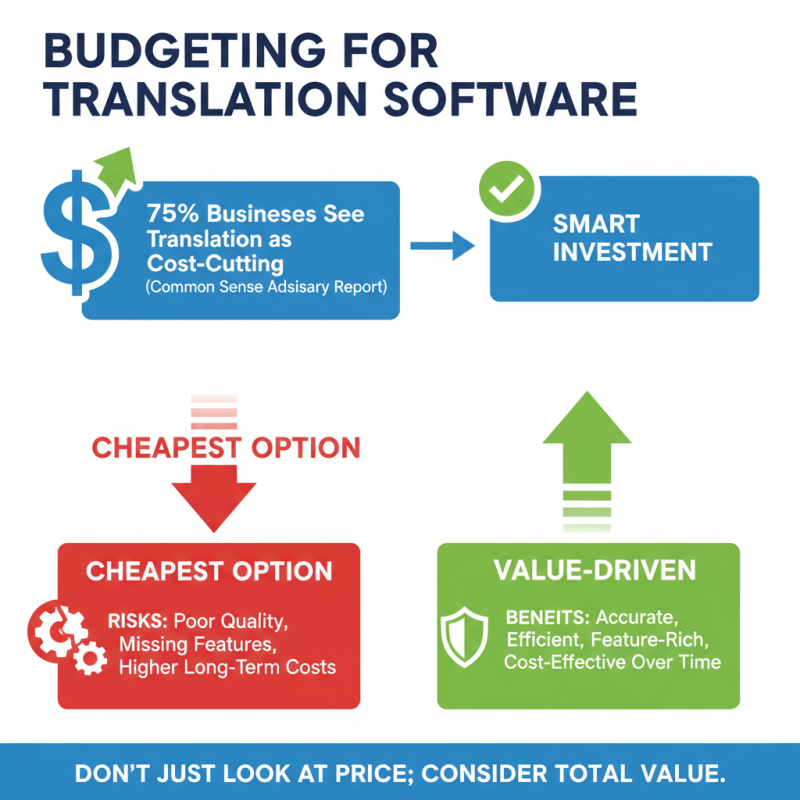
When considering translation software, budget is a vital factor. According to a report by the Common Sense Advisory, 75% of businesses view translation as a cost-cutting measure. However, choosing software solely based on price can lead to poor outcomes. A tool that's cheap might not deliver quality translations or essential features, ultimately costing more in the long run.
Investing in suitable translation software is crucial. The market offers various options, priced from a few hundred to several thousand dollars. A premium solution typically provides better linguistic support, integrated glossaries, and user-friendly interfaces. Be mindful of hidden costs such as subscription fees or required training sessions.
Tips:
- Always trial software before purchase; this helps gauge functionality.
- Consider the cost of updates and customer support.
- Factor in potential productivity gains when evaluating a budget.
It's essential to weigh the software's value against its cost. Sometimes, an affordable option may lack necessary features, leading you to rethink your budget allocation.
.svg)


.svg)

.svg)


 052925 - AI Translation 101 (1).png)


.svg)

.svg)


.jpg)