Why Choose Freight from China to Australia?
Freight China To Australia can be a practical choice for businesses seeking access to Chinese suppliers and Australian customers. The route connects major manufacturing hubs with ports such as Shanghai, Ningbo, and Shenzhen, and destinations including Sydney, Melbourne, and Brisbane. But a shipping decision is never just about distance. Cargo type, shipment size, delivery window, and handling needs all matter.
Logistics scholar Martin Christopher describes the mission of logistics management as “to plan and coordinate all those activities necessary to achieve desired levels of delivered service and quality at lowest possible cost.” That principle fits this route well. Sea freight may suit larger, less urgent consignments, while air freight can help when timing is tight. These are not guarantees of lower cost or faster delivery; schedules, capacity, and operating conditions can change.
Details count. A well-packed carton, a clear commercial invoice, and accurate cargo dimensions can make planning easier. Still, documentation alone cannot prevent every delay. Choosing a freight provider means asking specific questions about transit estimates, tracking, handling, insurance options, and destination delivery. Then compare the answers, not just the headline price.
This guide explores why businesses choose freight between China and Australia, what shipping options involve, and which practical details deserve attention. It also leaves room for an uncomfortable truth: the cheapest quote may not be the most suitable one. Check the assumptions before booking.
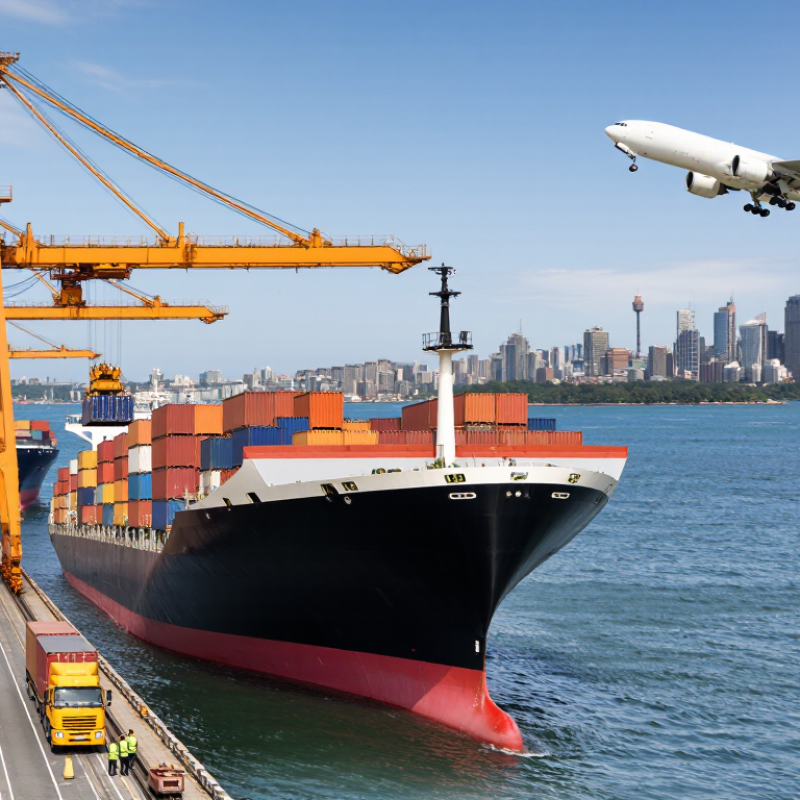
What Freight from China to Australia Includes
Freight from China to Australia can cover more than the ocean or air journey. A typical shipment may include collection from a supplier, export packing, transport to a port or airport, and the main international leg. The exact scope depends on the agreed shipping terms. Details matter. Before booking, confirm who arranges export paperwork, pays origin charges, and handles customs clearance in Australia. These responsibilities are not always included in one quoted price.
At the destination, the service may include terminal handling, customs documentation support, and delivery to a warehouse or business address. Some shipments need extra steps, such as palletising, temporary storage, or an inspection arranged by the relevant authorities. Cargo insurance may be available, but it is worth checking what it covers and what it excludes. Transit estimates can change with schedules, weather, congestion, and clearance requirements. Delays happen. A carton count, accurate dimensions, and clear delivery instructions help prevent avoidable handling issues. Even then, the paperwork can feel more complicated than expected, so ask for a written breakdown of included services, possible extra charges, and the party responsible at each stage.
Why Choose Freight from China to Australia?
Compare typical estimated door-to-door transit times by shipping method. Freight services can include pickup, export handling, international transport, customs clearance, and delivery; the exact inclusions depend on the service and shipment terms.
Transit times are approximate business-day ranges and may vary by origin, destination, schedules, customs processing, and delivery arrangements.
How Sea and Air Freight Serve Different Shipping Needs
Why Choose Freight from China to Australia?
How Sea and Air Freight Serve Different Shipping Needs
Sea and air freight solve different problems. Sea freight suits larger consignments, heavy cartons, and goods that can wait. A pallet of furniture or several boxes of stock may travel more economically by sea, especially when delivery dates are flexible. Transit usually takes longer, and port handling adds time. Build in room for delays.
Air freight is useful when speed matters more than freight cost. It can suit samples, replacement parts, or a small shipment needed to keep a project moving. But air charges depend on both weight and package volume. A large, lightweight carton may cost more than expected. Check dimensions before booking.
The best choice depends on the shipment, not just the quoted transit time. Compare door-to-door estimates, including collection, export handling, arrival fees, and final delivery. Ask how the schedule is calculated; published transit times may not include every handling step. Packing also matters: sturdy cartons and clear labels help prevent avoidable delays. There is no perfect option. A split shipment can sometimes balance speed and cost, though it adds coordination and expense. That trade-off deserves a real calculation.
Why China–Australia Freight Supports Trade and Supply Chains
China–Australia freight connects manufacturers, wholesalers, and retailers across a busy trade corridor. Regular shipping options help businesses move machinery parts, household goods, textiles, and other permitted cargo in planned volumes. Sea freight often suits larger consignments, while air freight can serve urgent, lighter shipments. The right choice depends on cargo dimensions, delivery deadlines, and total landed cost, not transit time alone. A pallet of packaging materials may tolerate a longer voyage; replacement components for a stalled production line may not. Details matter.
Reliable supply chains need more than a vessel booking. Accurate product descriptions, consistent packing lists, and early document checks can reduce avoidable delays during handover and clearance. Shipment milestones also help teams coordinate warehouse space, staffing, and stock replenishment. A small importer might track cartons from collection through port arrival, then keep a modest buffer for seasonal demand. That buffer costs money. But running out can cost more. Schedules may shift because of port congestion, weather, or inspections, so delivery estimates need room for variation. It is tempting to plan tightly; sometimes that is the weak point. Clear communication between the supplier, freight provider, and receiving team helps everyone adjust labor before cargo reaches its expected delivery window.
What Determines Shipping Cost, Transit Time, and Reliability
Freight cost from China to Australia depends on more than distance. A quote changes with container size, cargo volume, fuel surcharges, port fees, and delivery address. Sea freight usually suits bulky cargo; air freight can save days but costs much more. Ask whether the price includes terminal handling and inland trucking. Small details matter. A half-empty container can make each unit surprisingly expensive.
UNCTAD’s Review of Maritime Transport 2024 reported that global spot container freight rates rose about 150% between October 2023 and June 2024. This was a global market figure, not a China–Australia rate, but it shows how disruptions can quickly alter budgets. The World Bank’s Container Port Performance Index 2023 compares ports using vessel time in port. It offers a useful efficiency signal, though it cannot predict every sailing delay or your final delivery date.
Transit time depends on sailing frequency, direct versus transshipment routes, port congestion, and inland transport after arrival. Reliability also rests on practical steps: booking before cut-off, checking document details, and allowing buffer days around busy periods. Weather can still disrupt a careful plan. I would treat a quoted transit window as an estimate, not a promise; even a well-planned shipment can arrive late.
How Customs and Biosecurity Rules Shape the Shipping Process
Sea freight carries more than 80% of global merchandise trade by volume, according to UNCTAD’s Review of Maritime Transport 2024.
For shipments from China to Australia, arrival is only one milestone: customs documents and biosecurity checks can affect when cargo is released. Australian Border Force generally requires an import declaration for goods valued above AUD 1,000. Accurate invoices, packing lists, tariff classifications, and origin details help officials assess the shipment without avoidable queries.
Biosecurity requirements depend on the goods, their origin, and how they were processed. Australia’s Department of Agriculture, Fisheries and Forestry directs importers to check BICON before shipping, including requirements for packaging such as timber pallets. Clean, dry packaging and clear product descriptions make inspections easier; a vague description can mean extra questions or treatment.
Small details matter. Rules can feel fussy, and sometimes a small mismatch is enough to slow release.
The World Bank’s 2023 Logistics Performance Index ranked Australia 19th overall, but that national result cannot guarantee a smooth clearance for any individual shipment. Check current requirements early, and allow time for inspection.
.svg)


.svg)

.svg)


 052925 - AI Translation 101 (1).png)


.svg)

.svg)


.jpg)