10 Essential Tips to Translate Legal Documents Effectively
Translating legal documents is a complex task. It demands precision and a deep understanding of both languages involved. Renowned legal translator Sarah Johnson states, “To translate legal documents effectively, familiarity with legal terminology is crucial.” This insight highlights the need for expertise in this specialized field.
Legal documents often contain specific terms that affect the meaning of sentences. One misplaced word can lead to misinterpretation. Translators must ensure they are well-versed in both legal systems. Each jurisdiction has its nuances, and translating without this knowledge can result in grave errors. Attention to detail is not just appreciated; it is essential.
Moreover, unexpected challenges may arise during the translation process. Legal texts often include cultural references or idiomatic expressions. Translators must navigate these carefully to maintain clarity. They may find it beneficial to collaborate with legal professionals. This collaboration can enhance the accuracy and reliability of the translated documents. Taking these steps can lead to effective and trustworthy translations.

Understanding the Importance of Precision in Legal Translation
Precision in legal translation is not just important; it is critical. Legal documents often carry significant weight, influencing agreements, contracts, and even court rulings. A single mistranslated word can lead to costly misunderstandings and disputes. Translators need to grasp the nuances of both languages. They must understand legal terminology deeply to ensure accuracy.
Using context is key in legal translation. Terms can vary greatly depending on the jurisdiction. For instance, a word that carries one meaning in English may have an entirely different implication in another language's legal system. This challenge creates room for misinterpretation. Translators must wrestle with these complexities daily. They must constantly ask themselves if they have captured the legal essence correctly.
It is also essential to stay updated. Legal systems evolve, and language does too. Continuing education is vital for accuracy. Moreover, relying solely on translation software can lead to oversights. A machine may lack understanding of contextual or cultural subtleties. This dependence can risk reliability. Therefore, human expertise remains indispensable in the realm of legal documents.
Legal Translation Accuracy Metrics
Common Challenges Faced in Legal Document Translation
Translating legal documents can be particularly challenging due to the complex nature of legal language. One major difficulty is the ambiguity often inherent in legal terms. Words or phrases may have specific meanings in one jurisdiction but could differ in another. This requires the translator to have a deep understanding of both the source and target legal systems. Misinterpretations can lead to serious consequences.
Additionally, cultural nuances play a significant role in legal translation. Certain concepts may not exist in the target language. A legal term could evoke specific rights or responsibilities that don’t translate directly. It can be tough to convey these concepts accurately. Translators must engage in critical thinking to find a balance. Relying solely on dictionaries often leads to mistakes.
Moreover, maintaining consistency is vital in legal documents. A single term must be translated the same way throughout the document. Inconsistencies can create confusion. This requires meticulous attention to detail. It’s easy to overlook repeated terms, especially in long texts. Regularly reviewing and editing work is crucial. This helps ensure accuracy and reliability in the final translation.
10 Essential Tips to Translate Legal Documents Effectively - Common Challenges Faced in Legal Document Translation
| Tip Number | Translation Tip | Common Challenge | Suggested Solution |
|---|---|---|---|
| 1 | Understand the Legal Terminology | Misinterpretation of terms | Research legal definitions and context |
| 2 | Maintain Consistency in Terminology | Inconsistent usage of terms | Create a glossary of terms |
| 3 | Ensure Cultural Relevance | Cultural misunderstandings | Consult native speakers or legal experts |
| 4 | Utilize Legal Translation Software | Time-consuming translation process | Use CAT tools for efficiency |
| 5 | Review and Edit Thoroughly | Overlooked errors | Implement a peer review process |
| 6 | Consult Legal Professionals | Uncertainty in legal implications | Seek guidance from attorneys |
| 7 | Be Aware of Local Laws | Differing legal frameworks | Research applicable laws in the target language |
| 8 | Time Management | Rushed translations | Set realistic deadlines for projects |
| 9 | Focus on Clarity and Accuracy | Ambiguity in language | Prioritize clear sentence structures |
| 10 | Continuously Update Skills | Outdated knowledge | Participate in workshops and training |
Key Terminology: Ensuring Accuracy in Legal Language
Translating legal documents requires a deep understanding of terminology. Every word matters. A mistranslated term can lead to significant legal repercussions. According to a study by the American Translators Association, nearly 90% of legal disputes arise due to misunderstandings rooted in translation errors. Such statistics highlight the need for accuracy.
Legal language often contains complex phrases and concepts. It is vital to know the context behind each term. For instance, the word "consideration" in a contract refers to something of value exchanged, which may differ from its everyday usage. Additionally, idioms and phrases can lose their meaning across languages. A literal translation may misrepresent the intent.
Many translators report the challenge of keeping legal terminology consistent. Failure to maintain uniformity can introduce ambiguity. The European Commission notes that a lack of standardized terms can complicate cross-border legal issues, emphasizing the necessity for attention to detail. In legal translations, ensuring accuracy is a skill that requires more than just language proficiency; it demands specialized knowledge and experience.
Utilizing Professional Tools and Resources for Legal Translation
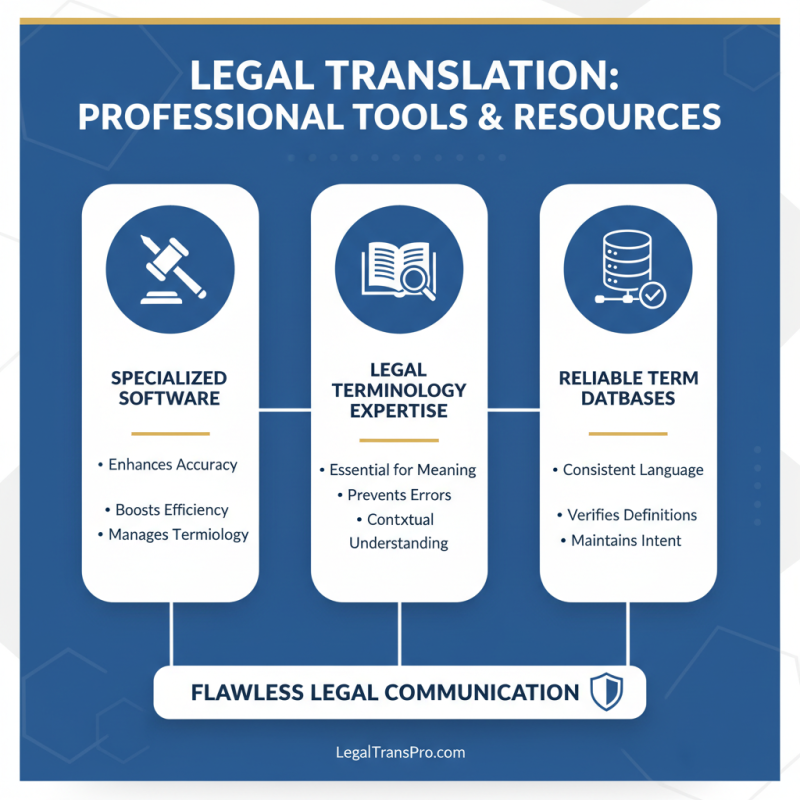
When translating legal documents, using professional tools and resources is crucial. Specialized software can enhance accuracy and efficiency. These tools help manage terminology effectively. Familiarity with legal jargon is essential. A reliable database of terms can prevent errors. It ensures that the translation maintains the intended meaning.
Researching resources also plays a significant role. Accessing legal databases and libraries can provide context. This context is vital for understanding intricate legal concepts. Online forums can be a useful way to connect with other professionals. However, relying solely on online resources can lead to misinformation. Always verify information from trusted sources.
Collaboration with legal experts can improve the translation process. They can provide insights into specific legal systems. While this might slow down the process, the benefits outweigh the drawbacks. Combining tools with human expertise often yields the best results. Striking a balance between efficiency and thoroughness is key. Legal translation is not just about words; it's about conveying meaning accurately.
The Role of Cultural Nuances in Legal Document Translation
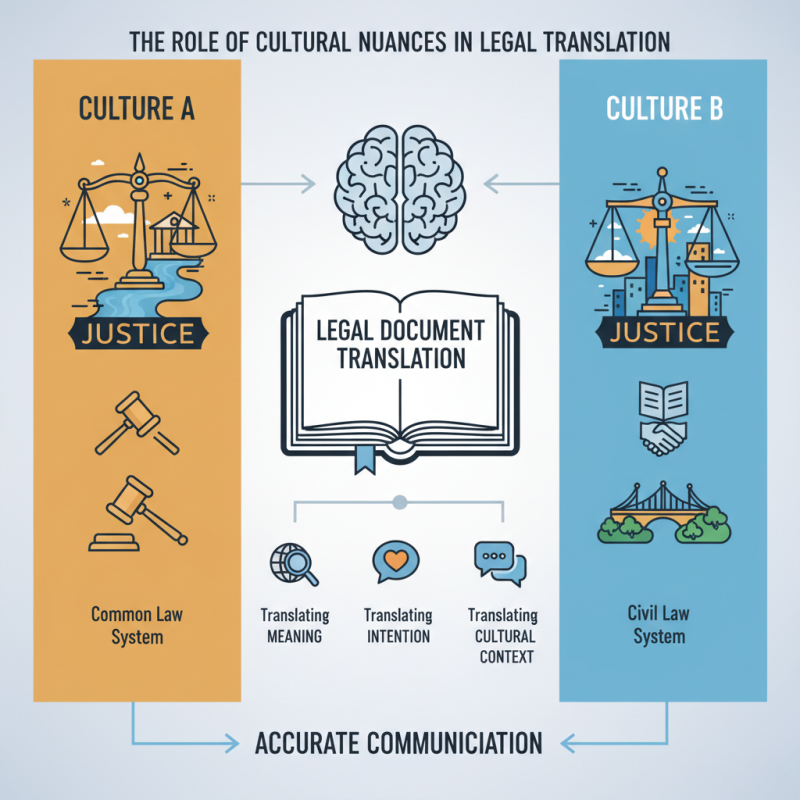
When translating legal documents, cultural nuances play a significant role in ensuring accurate communication. Different cultures have unique legal concepts that can differ greatly from one jurisdiction to another. For instance, the idea of "justice" may have varied implications in various legal systems. Understanding these differences is crucial for effective translation. It’s not just about translating words; it’s about translating meaning, intention, and cultural context.
Legal terms may not directly translate due to cultural variances. A term familiar in one country may be completely foreign in another. A translator must navigate these challenges carefully. They should consider local customs, legal practices, and even the language's formality level. Misinterpretations can lead to serious consequences, creating legal loopholes or misunderstandings. This complexity highlights the importance of not just having linguistic skills but also a deep cultural understanding.
Moreover, the use of idiomatic expressions varies widely. What is considered formal in one culture may seem informal in another. A translator must find the right balance to maintain the document’s integrity. It’s essential to remember that not every translation will be perfect. The goal should be to find a suitable equivalent that resonates with the target audience. This process requires continuous learning and adaptability. Each translation presents a new challenge and a new opportunity for growth.
Related Posts
-
2026 How to Choose the Best Localization Software for Your Business?
-

China Best Localization Tools for Global Success?
-

What is Translation Software and How Does it Work?
-

How AI for Translation is Revolutionizing Global Sourcing?
-
2026 Top Trends in Translation Management Systems You Should Know?
-

How to Choose the Best Translation Management Software for Your Needs?