What is Localization Software and How Does It Work?
In today's globalized world, businesses increasingly rely on localization software to thrive in diverse markets. Market research indicates that 72% of consumers prefer to connect with brands in their native languages. Localization tools help bridge this gap. They empower companies to tailor their content for local audiences, ensuring relevance and resonance.
The localization software industry continues to grow, driven by rising demand for multilingual content. Recent studies predict steady growth at a rate of over 6% annually through 2025. Companies recognize that investing in localization can significantly enhance user experience and brand loyalty. This isn't just about translation; it's about cultural adaptation.
However, challenges exist. Not all localization tools offer the same level of quality and flexibility. Businesses must choose wisely. A flawed localization process can lead to miscommunication and brand damage. Companies often underestimate the need for continuous updates and human oversight. Navigating this landscape requires careful consideration and strategy.

Definition of Localization Software and Its Purpose
Localization software serves a crucial role in adapting content for different regions. It helps businesses communicate effectively with diverse audiences. The primary purpose of localization software is to ensure that language and cultural nuances are respected. This process goes beyond mere translation. It includes adapting graphics, layout, and even cultural references to suit local preferences.
In recent studies, around 75% of consumers prefer products described in their native language. This highlights the significance of localization. According to a report by Common Sense Advisory, a staggering 56% of buyers say language is more important than price. This data underscores why localization software is not just a luxury; it's a necessity for businesses targeting global markets.
However, implementing localization is not without its challenges. Many companies struggle with maintaining consistency across languages. Tools may not always capture cultural subtleties, leading to potential misinterpretations. This can impact user experience significantly. It's vital to continuously assess the effectiveness of localization strategies. A flawed approach can hinder a brand’s reputation.
Prioritizing these reflections can enhance the effectiveness of localization efforts.
Key Features and Functions of Localization Software
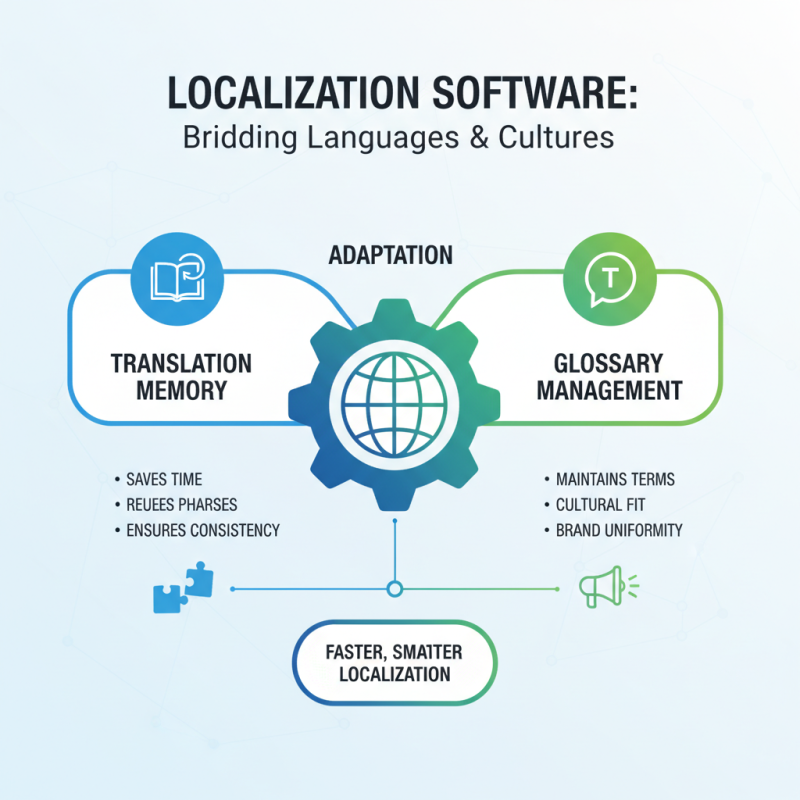
Localization software plays a crucial role in adapting products and content for different languages and cultures. Key features often include translation memory, which stores previous translations for future use. This can save time and ensure consistency across projects. Glossary management is another important function. It helps maintain terminology that resonates with local audiences.
User-friendly interfaces are essential. They allow translators to navigate efficiently. Collaborative tools enable teams to work together seamlessly. Review features prevent errors in the final output. Some localization software even offers real-time updates, thus helping teams stay aligned.
Yet, not all software meets the diverse needs of every project. Some might lack flexibility, requiring users to adjust their workflows. Occasionally, translation quality may suffer if machine assistance overshadows human touch. Users must continuously assess the effectiveness of their chosen tools. Adapting to local cultures involves nuances that automated processes might overlook.
How Localization Software Facilitates Multilingual Content
Localization software plays a crucial role in creating multilingual content. As organizations expand globally, they encounter diverse languages and cultures. Effective localization ensures that the message resonates with the target audience. A recent report from Common Sense Advisory shows that 75% of consumers prefer product information in their native language. This statistic highlights the growing need for localization tools.
These software solutions streamline the translation process. They often utilize translation memory, which saves previously translated segments. This reduces both time and costs. However, not all content translates well. Context and cultural nuances can complicate the process. In fact, 40% of businesses reported challenges related to cultural adaptation. It's important to recognize these potential pitfalls to improve outcomes. Balancing accuracy with creativity remains a constant challenge.
Localization software can also facilitate collaboration among teams. It allows for real-time updates, making content management more efficient. Nonetheless, it’s vital to evaluate the quality of translations. Automated solutions can sometimes miss the subtleties of language. Human oversight is necessary to ensure authenticity. Therefore, while technology aids the process, it doesn't replace the human touch in localization.
Localization Software Market Growth
This chart illustrates the growth of the localization software market from 2019 to 2023, demonstrating increasing investment in multilingual content solutions.
The Process of Using Localization Software Effectively
Localization software streamlines the process of adapting content for different languages and cultures. Using such software effectively requires an understanding of specific steps involved. One needs to begin by preparing the content for translation, ensuring it is clear and free of cultural references that might not translate well. A simple, straightforward approach helps.
Next, selecting the right localization software is crucial. Some tools have extensive language support, while others offer advanced features like translation memory and glossaries. However, not all options fit every project. Evaluation is necessary. Trials and user feedback can reveal what works best for different needs. It can seem overwhelming at first.
Finally, quality assurance is vital. After localization, reviewing the translated content ensures accuracy and cultural relevance. Engaging native speakers for feedback can be beneficial. Mistakes often show up later, leading to potential miscommunication. By refining each step and remaining open to critique, the localization process becomes more efficient and effective. Taking time to reflect on the results can lead to better outcomes in future projects.
Benefits and Challenges of Implementing Localization Software
Implementing localization software can greatly enhance communication across various regions. According to a study by Common Sense Advisory, 76% of consumers prefer to purchase products in their native language. This statistic highlights the importance of effective localization. However, the implementation process is not without its challenges.
Cost often stands as a barrier. Many companies underestimate the budget required for quality localization. A survey indicated that 31% of businesses faced unexpected costs during implementation. Additionally, the complexity of multiple languages can overwhelm teams. This complexity leads to potential mistakes that can damage brand reputation.
Limited resources can also hinder success. Smaller teams often lack the expertise needed for nuanced localization. This gap can result in localized content that feels generic or out of touch. Moreover, continuous updates can be a logistical nightmare. Maintaining accuracy becomes difficult as language evolves, leading to outdated content. Thus, while the benefits are clear, the path to successful localization requires careful planning and reflection.
.svg)


.svg)

.svg)


 052925 - AI Translation 101 (1).png)


.svg)

.svg)


.jpg)