Why You Should Localize Mobile Experiences for Global Audiences?
In today’s global market, businesses must ensure that they effectively engage diverse audiences. To achieve this, brands need to localize mobile experiences. Localization goes beyond mere translation. It involves understanding cultural nuances and user behaviors in different regions.
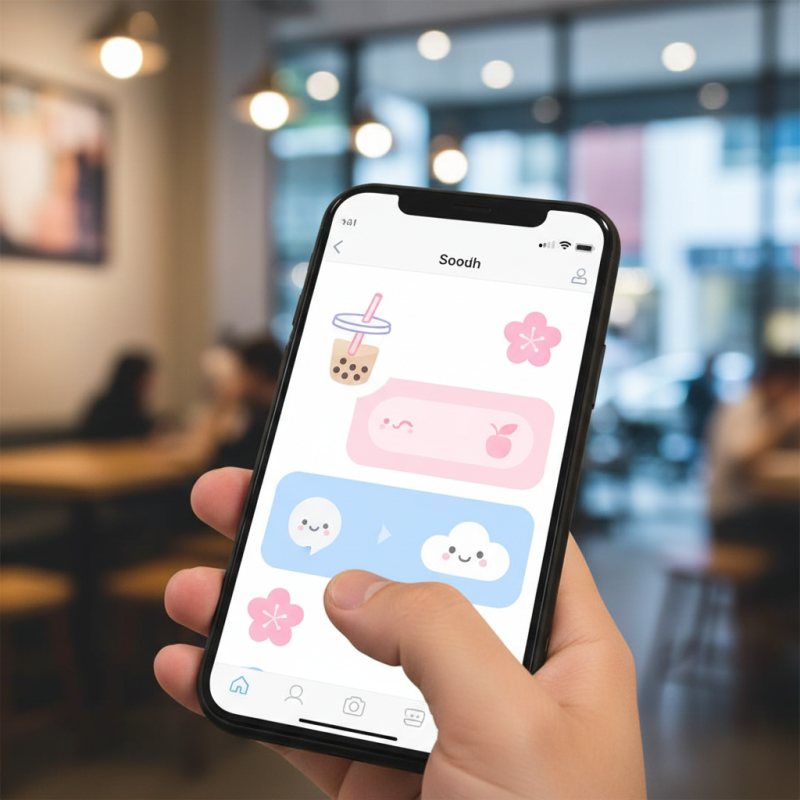
Imagine a mobile app designed for a young audience in Japan. The colors, icons, and language should resonate with local preferences. Users in this demographic expect seamless experiences tailored to their habits. However, many companies overlook these crucial aspects. They assume one size fits all, but this can lead to disengagement and frustration.
Fostering authentic connections requires a commitment to localize mobile interactions thoughtfully. While some organizations have made strides, many still struggle with execution. Effective localization is a journey, not a destination. Targeting global audiences starts with recognizing the importance of being culturally relevant.
Importance of Localization in the Mobile Experience
Localization in mobile experiences is crucial for reaching diverse global audiences. Users prefer apps and websites that speak their language, both literally and culturally. It goes beyond mere translation. It involves understanding local customs, values, and preferences. This can dramatically enhance user satisfaction.
A well-localized mobile experience can lead to higher engagement. Users are more likely to download and use an app that resonates with their cultural context. For instance, color meanings vary worldwide. What is appealing in one culture may be offensive in another. Ignoring these nuances can alienate potential users. Brands must invest time in researching these aspects to succeed.
Despite the clear benefits, many companies struggle with localization. Some rush the process, resulting in poor translations and cultural faux pas. Others may overlook smaller markets, missing out on significant opportunities. It's not just about translating words but creating a seamless and enjoyable experience for every user, no matter where they are. This requires ongoing reflection and adaptation.
Importance of Localization in Mobile Experience
Understanding Global Audience Preferences and Behaviors
Understanding global audience preferences and behaviors is crucial for mobile experience localization. Different regions have distinct cultural values. For instance, color meanings vary widely across cultures. A color that symbolizes luck in one country might represent mourning in another. This can impact user interface design significantly.
User behaviors also differ. Some cultures prefer minimalistic designs, while others enjoy rich visuals and detailed content. Language nuances matter too. A literal translation might lose the context or humor intended. Adapting the message can make a difference in how it resonates with users.
There are challenges in this process. It's easy to overlook local customs or practices. Even subtle details can lead to misinterpretation. Research and testing play vital roles in overcoming these obstacles. Gathering feedback from local audiences can guide improvements. It is essential to stay informed about evolving preferences. This creates a more inclusive and appealing mobile experience for diverse users.
Key Benefits of Localizing Mobile Content
Localizing mobile content opens doors to new markets. It allows brands to connect with diverse audiences on a deeper level. When users see content in their native language, it fosters trust. They are more likely to engage with apps and services that feel familiar and relevant.
Cultural nuances play a significant role in user experience. A direct translation may miss the mark. Local slang, humor, or cultural references can make a substantial difference. Tailoring content to fit local tastes not only enhances usability but also encourages greater loyalty. Users appreciate when their language and cultural context are considered.
Neglecting localization can lead to misunderstandings and missed opportunities. Generic content may alienate potential users. In a global landscape, standing out is vital. Thoughtfully localized experiences resonate emotionally and drive conversions. Reflecting local culture in mobile experiences can truly transform engagement rates.
Challenges in Mobile Localization and How to Overcome Them
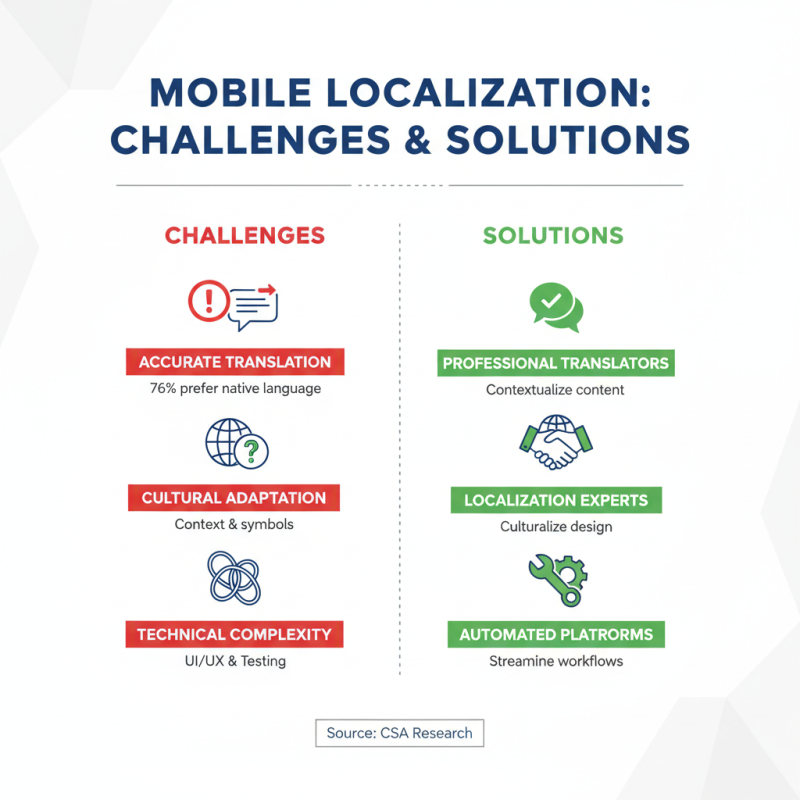
Mobile localization presents several challenges that must be addressed to cater to diverse global audiences. For instance, a study from CSA Research found that 76% of consumers prefer to buy products in their native language. This statistic underscores the importance of localizing mobile experiences. However, many companies struggle with accurately translating content. Misinterpretations can lead to confusion and distrust among users.
Cultural differences also complicate mobile localization. Visuals that resonate in one region may not have the same effect elsewhere. Understanding local customs, symbols, and preferences is critical. It is estimated that 40% of users are more likely to abandon a mobile app that feels culturally insensitive. This data highlights the risk of neglecting localization in design and functionality.
Technical limitations can hinder localization efforts. Many mobile platforms have strict character limitations and layout issues, making it challenging to fit translated text. Therefore, teams need to incorporate agile processes that allow for continuous testing and iteration. Regular feedback loops can help identify issues early, leading to better localized experiences. Consistent monitoring ensures that localization efforts meet evolving user expectations.
Best Practices for Effective Mobile Experience Localization
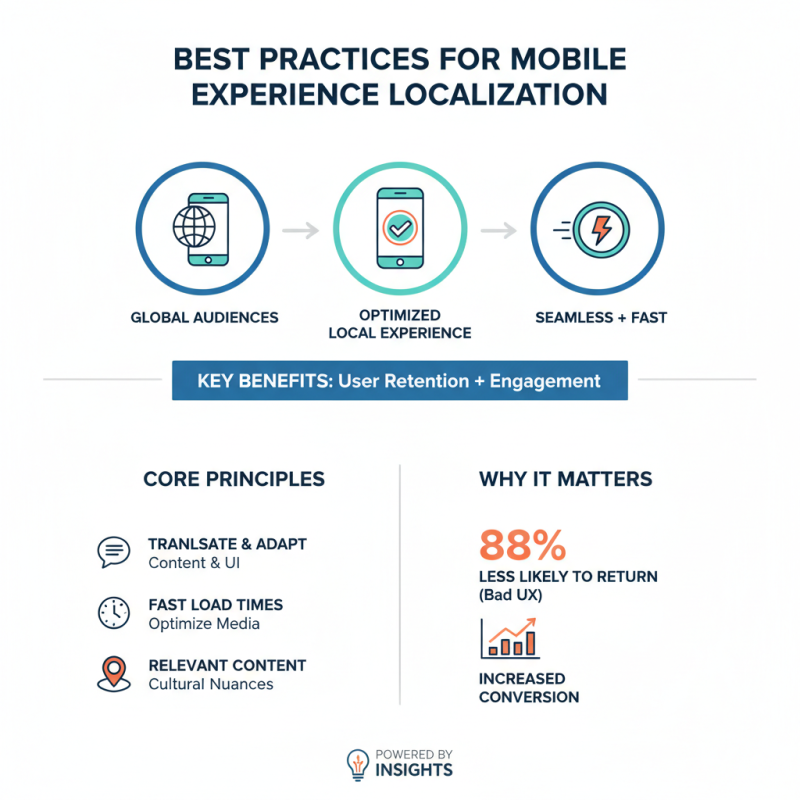
Localizing mobile experiences for global audiences is essential in today's interconnected world. A study by Statista shows that 88% of consumers are less likely to return to a site after a bad experience. This highlights the necessity for an optimized, localized mobile experience. Users expect seamless navigation, relevant content, and quick load times.
Tip: Focus on language and culture. Adapt not just the language, but also cultural nuances and symbols. For instance, using local currencies enhances user trust and boosts conversion rates significantly. A report from Common Sense Advisory states that 72% of consumers prefer to buy products in their native language.
Another critical factor is to prioritize user feedback. Listening to local users offers insights into preferences that raw data may miss. Besides, integrating local payment methods can remove barriers. A survey indicated that 51% of online shoppers abandon their carts due to payment frustrations.
Tip: Regularly evaluate the localization efforts. A/B testing different localized versions can reveal valuable insights for improvement. Tailoring every aspect of the mobile experience may require ongoing adjustments but can lead to more satisfied users. Engaging with local communities can help identify areas that need change or refinement.
.svg)


.svg)

.svg)


 052925 - AI Translation 101 (1).png)


.svg)

.svg)


.jpg)