Top 10 Tips for Using Automatic Translators Effectively?
In today's interconnected world, effective communication is vital. Automatic translators serve as tools that bridge language barriers. They assist in translating text quickly and can simplify various tasks. However, using an automatic translator effectively requires understanding its limitations.
Many people rely entirely on these tools, but they should not be the only resource. Context matters when translating. Nuances can be lost, leading to misunderstandings. For example, idiomatic expressions may not translate accurately. This highlights the importance of human oversight.
Also, automatic translators might produce awkward phrasing. Relying solely on them might create confusion. It’s beneficial to analyze the output critically. Individuals should consider the context and refine the translations when necessary. Engaging with the language is still crucial in achieving clear communication. Remember, while automatic translators can be helpful, they are not infallible.

Understanding Different Types of Automatic Translators Available Today
Automatic translators have come a long way, and several types are available today. Machine translation systems, such as rule-based, statistical, and neural networks, serve different needs. Rule-based systems follow grammatical rules and are often precise but can be slow. Statistical methods analyze vast data sets to produce translations, which may sound more natural but sometimes miss context. Neural networks, the latest technology, offer the best results for fluidity, thanks to deep learning algorithms. According to a recent study, around 70% of enterprise users prefer neural machine translation for its accuracy.
Despite their advancements, automatic translators come with challenges. They may struggle with idiomatic expressions, resulting in awkward translations. Research shows that 30% of users report misunderstandings due to these errors. In languages with complex grammar, like Arabic or Japanese, the risk of error increases. The nuances in tone or culture can also be overlooked. Users must remain critical and review translations for context and meaning, especially in sensitive content. A good understanding of the types of available translators can help users harness their strengths while being aware of their limitations.
Choosing the Right Automatic Translator for Your Needs
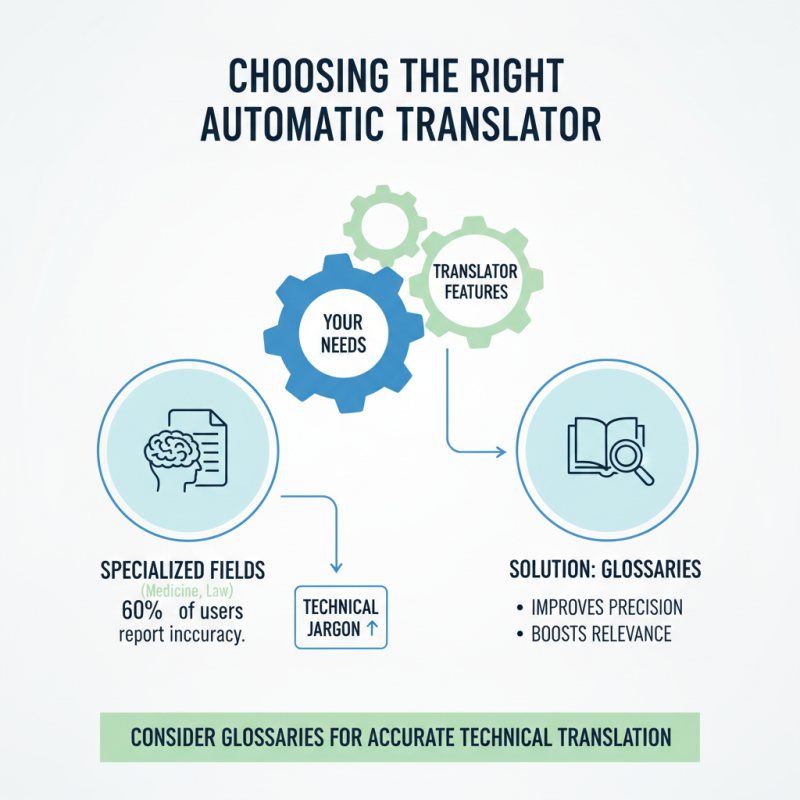
When it comes to choosing the right automatic translator, you need to consider your specific needs. According to industry research, approximately 60% of users feel that automatic translators lack accuracy in specialized fields like medicine and law. This is a significant factor to keep in mind. If your communication involves technical jargon, look for a translator that offers glossaries. Such additions can improve the output's relevance and precision.
Another essential aspect is language support. Many translation tools cover major languages, but not all focus on regional dialects. A study shows that 40% of users reported inaccuracies when translating regional expressions. Take time to find a translator that specializes in the languages you frequently use. It might make all the difference in understanding subtle nuances.
As optimizing use of these tools is key, consider these tips: Always review the output carefully. Context matters a lot in translation. Additionally, use simpler sentences to get better results. Avoid slang as well, as it often confuses translation engines. These small adjustments can lead to more effective communication, enhancing your overall experience.
Improving Translation Quality with Contextual Input
Using automatic translators can be a great way to bridge language barriers. However, the quality of translations often depends on how users input context. Studies show that 60% of translation inaccuracies stem from insufficient contextual information. When users provide more details, translators can produce better results.
For instance, adding sentences before or after the intended message can clarify nuance. Specific phrases like "in the context of" also direct the translation engine better. A report from a language technology firm indicates that contextual input improves accuracy by up to 40%. This means less time spent on correcting errors later.
However, not all translation tools handle context well. Many struggle with idioms, slang, and cultural references. Users should remain cautious. While technology is improving, human oversight is still essential. Remember, automatic translations aren't perfect. They often fail to capture emotive tone or specific connotations. Strive for more thoughtful input to achieve clearer translations.
Top 10 Tips for Using Automatic Translators Effectively
| Tip Number |
Tip Description |
Expected Outcome |
| 1 |
Provide complete sentences. |
Improved translation accuracy. |
| 2 |
Use simple language and avoid slang. |
Clearer outcomes in translation. |
| 3 |
Maintain context in the text. |
Better contextually relevant translations. |
| 4 |
Check for grammar and spelling errors. |
Reduced errors in output text. |
| 5 |
Use domain-specific terminology carefully. |
Increased relevance in specialized fields. |
| 6 |
Break down large texts into smaller parts. |
Enhanced clarity and coherence. |
| 7 |
Review translations with a native speaker. |
Improved naturalness and fluency. |
| 8 |
Experiment with different translator tools. |
Broader comparison of translation quality. |
| 9 |
Use additional translation memory if available. |
Consistency in repeated phrases. |
| 10 |
Provide feedback on translation results. |
Improved future translation performance. |
Reviewing and Editing Translations for Accuracy and Fluency
When using automatic translators, reviewing and editing translations is crucial. These tools often misinterpret context, leading to inaccurate translations. A common issue arises with idiomatic expressions. For example, a phrase that means something specific in one language might translate literally, leaving the meaning obscured.
After generating a translation, take the time to read it carefully. Look for awkward phrases or grammatical errors. Sometimes, sentences appear correct but sound unnatural. Reading the translation aloud can help you catch these flaws. Consider the tone and intent of the original text. Does the translation match that tone? If not, adjustments are needed.
Native speakers can be a helpful resource. If possible, get feedback from someone fluent in both languages. They might spot nuances you overlooked. It’s important to remember that automatic translations are a starting point. They can save time, but they are not infallible. Always prioritize accuracy and fluency for the best communication.
Leveraging Additional Resources for Enhanced Understanding
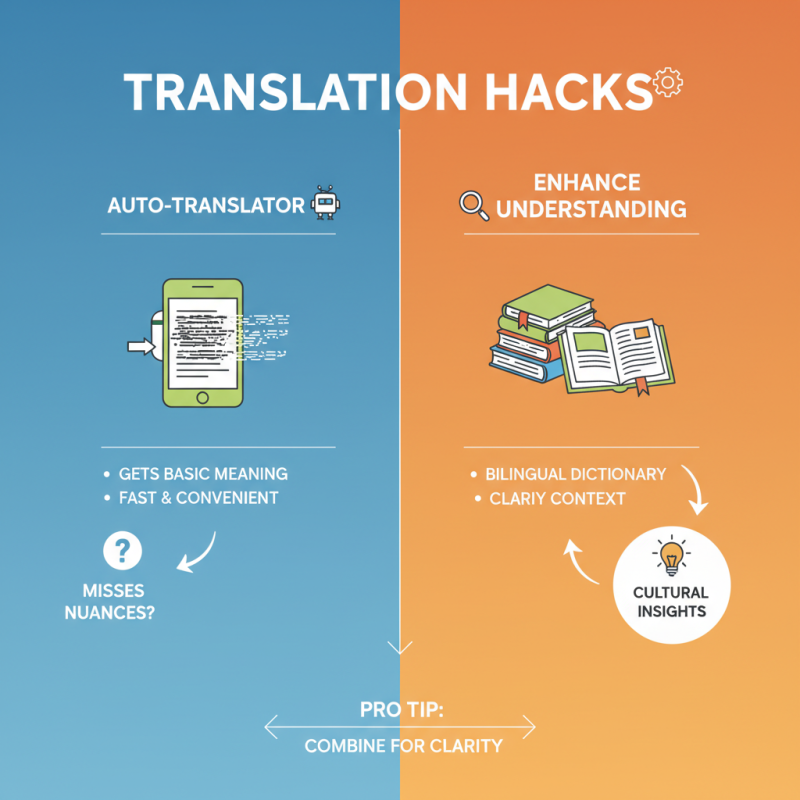
Automatic translators are powerful tools, but they can sometimes miss the mark. To truly enhance your understanding, consider using additional resources alongside them. For instance, after getting a basic translation, consulting a bilingual dictionary can clarify the context. It helps to grasp nuanced meanings that a translator might overlook. Many phrases have cultural implications, and a dictionary can shed light on these subtleties.
Online forums are another great resource. Engaging with native speakers or language enthusiasts can provide insights that no translator can offer. Questions about idioms or colloquial expressions often arise. Asking for explanations can lead to a deeper understanding of the language. Sometimes, automatic translations can create confusion, especially with slang. By reaching out to others, you open the door to real conversations and contextual learning. Connecting with people can guide you to better comprehension.
.svg)


.svg)

.svg)


 052925 - AI Translation 101 (1).png)


.svg)

.svg)


.jpg)