Top 10 Spillway Gate Types You Need to Know About?
In the realm of hydraulic engineering, understanding the various types of Spillway Gates is crucial. According to Dr. Emily Carter, a leading expert in hydraulic structures, "Choosing the right spillway gate can make the difference between disaster and safety." Spillway gates are essential for managing water flow and preventing dam failures. Each gate type offers distinct advantages and is suitable for specific conditions.
Different spillway gate types, such as radial gates and sluice gates, have unique designs and functions. They are tailored to address various challenges in water management. For instance, radial gates can efficiently handle large volumes of water, making them ideal for high-flow scenarios. However, selection is often more complex than just functionality; maintenance and operational ease must also be considered.
Yet, many engineers overlook the importance of choosing the right spillway gate type. Some might prioritize cost over efficiency, leading to future challenges. As we delve into the top ten spillway gate types, let's reflect on how each option can enhance safety and sustainability in hydraulic systems.
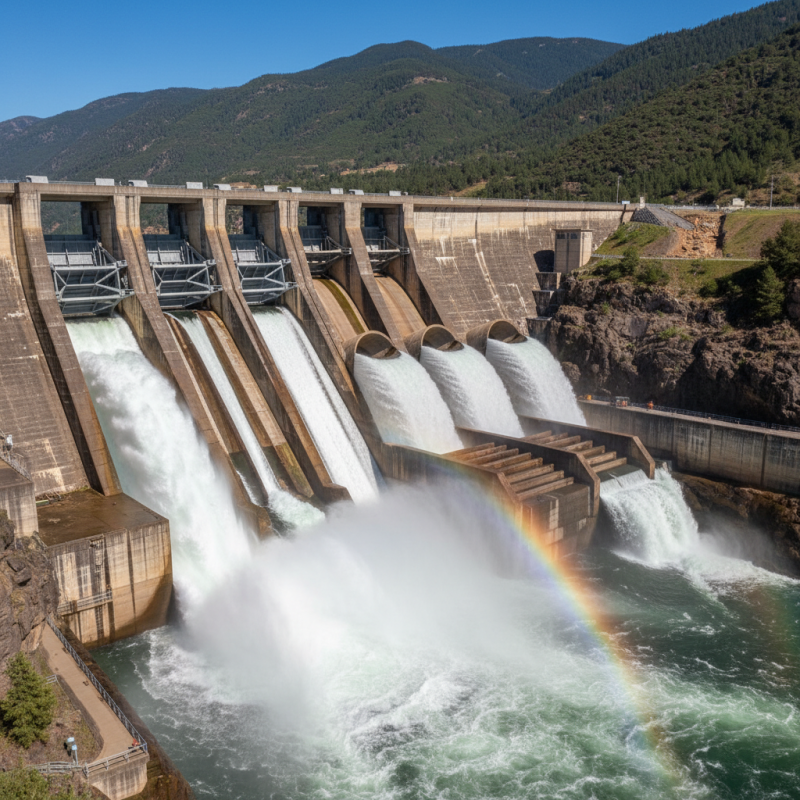
Spillway Gate Fundamentals: Understanding Their Importance in Hydraulics
Spillway gates are crucial in hydraulic systems. They manage water flow and ensure the safe operation of dams. According to a report by the International Commission on Large Dams, the failure to control spillway gates can lead to significant risks. In fact, improper management could result in catastrophic dam failures, affecting nearby communities and ecosystems.
Different types of spillway gates serve various functions. Some are designed for rapid water release during heavy rainfall. Others handle normal flow conditions. Data from the U.S. Bureau of Reclamation indicates that spillway gate failures account for nearly 30% of all dam incidents. This emphasizes the need for regular maintenance and operational training for staff.
Understanding the mechanics behind these gates is essential. For example, hydraulic lift gates use pressurized water to operate. This technology requires precise calculations for efficiency and safety. However, many engineers overlook the importance of routine inspections, which can lead to unforeseen issues. Continuous training and testing are vital to prevent costly mistakes in gate operations.
Common Types of Spillway Gates: A Comparative Overview of Gate Designs
Spillway gates play a crucial role in water management for dams and reservoirs. They regulate water flow, ensuring safety during overflow events. Among the common types are vertical lift gates. These gates rise straight up, allowing for quick adjustments to water levels. Their design can be more complex, which sometimes leads to maintenance challenges.
Another notable type is the roller gate. These gates roll on tracks, providing smooth operation. Their simplicity makes them easier to maintain, yet they're often less adaptable to rapid flow changes. On the other hand, Tainter gates are curved and can handle significant pressure. They require precise counterweights for optimal operation. This can lead to mechanical issues if not regularly inspected.
The effectiveness of each gate type depends on design specifics and site conditions. Different materials and operating mechanisms impact their reliability. For example, corrosion resistance is essential for longevity. However, choosing the right type often requires balancing complexity against ease of use. It's a constant reflection of engineering challenges.
Operational Mechanics: How Different Gate Types Control Water Flow
Understanding the operational mechanics behind spillway gates is crucial for effective water management. Different types of gates, such as flat-slider and flap gates, offer various methods to control flow rates. Research indicates that the choice of gate can influence reservoir levels significantly. A study from the Hydraulics Institute shows that improperly selected gates can lead to operational inefficiencies, impacting water resource management.
Flat-slider gates, for instance, operate by sliding along a track. They are efficient at low-head conditions, allowing for precise control. In contrast, flap gates hinge at the top and can regulate water flow even during high-pressure situations. However, they can be affected by debris and sediment build-up, which may hinder their functionality. According to a report by the American Society of Civil Engineers, almost 30% of gate failures are attributed to maintenance neglect.
Another type, the roller gate, uses cylindrical rollers for support. This design reduces friction and wear but requires ample space for installation. Yet, the complexity of their mechanics can contribute to oversight during routine inspections. A comprehensive assessment in the Journal of Hydraulic Engineering emphasizes the importance of regular maintenance to ensure these gates operate efficiently. Each gate type has its strengths and weaknesses. Understanding these dynamics is essential for successful water management strategies.
Key Advantages and Disadvantages of Various Spillway Gate Types
When considering spillway gate types, knowing their advantages and disadvantages is crucial. Vertical lift gates are popular for their ability to manage high flows efficiently. A report from the International Water Association indicates their reliability under intense conditions. However, maintenance can be costly and complex.
Radial gates offer simplicity and are easy to operate. Their curved design allows for effective water control. On the downside, they may not handle excessive pressure well, risking potential failures. Additionally, the installation cost is relatively high.
**Tip:** Regular maintenance checks on gate mechanisms can prevent unexpected failures.
Another option is roller gates, which are highly durable and can operate in various conditions. Their adaptability makes them a favorite in many projects. Still, they require substantial space and specific design considerations. Understanding each type's operational limits and vulnerabilities is vital for engineers and planners.
**Tip:** Always assess site-specific conditions before choosing a gate type. Investing in the right gate can save future costs and improve safety.
Top 10 Spillway Gate Types You Need to Know About
| Gate Type | Advantages | Disadvantages |
| Vertical Lift Gate | High efficiency, good for large flow rates. | Requires more space for operation. |
| Radial Gate | Good control of water levels, compact design. | Complex installation and maintenance. |
| Taintor Gate | Simple design, low cost. | Limited flow control at high levels. |
| Slide Gate | Less energy loss, easy to operate. | Potential for jamming. |
| Accordion Gate | Space-efficient, good for smaller dams. | Limited flow capacity. |
| Flip Bucket Gate | Excellent for debris handling, efficient energy dissipation. | Requires careful design to prevent splash. |
| Floating Gate | Adaptable to changing water levels. | May be affected by wind and waves. |
| Sluice Gate | Effective for controlling water discharge. | Can be prone to blockages. |
| Concrete Gate | Strong and durable, low maintenance. | Limited mobility. |
| Flashboards | Cost-effective and easy to install. | Temporary solution, can be washed away. |
Industry Standards and Guidelines for Spillway Gate Implementation
The implementation of spillway gates must adhere to established industry standards and guidelines. These documents ensure safety and efficiency in water management systems. According to the U.S. Army Corps of Engineers, a properly designed spillway gate can reduce flood risks by up to 70%. This emphasizes the critical need for accurate calculations in design.
Standards such as those set by the American Society of Civil Engineers (ASCE) provide detailed specifications. These specifications dictate materials, load factors, and operational parameters for gate types. In some projects, oversight is necessary, as errors can lead to costly reworks. An analysis of case studies showed that nearly 30% of spillway projects exceeded budgets due to design flaws.
Proper training and adherence to guidelines can mitigate such issues. Utilizing resources like the Federal Emergency Management Agency (FEMA) reports ensures that engineers stay updated. Inexperience can lead to misjudgments regarding load stresses. Continuous education in this field is essential for reducing risks during operation and maintenance stages of spillway gates.
Top 10 Spillway Gate Types
.svg)


.svg)

.svg)


 052925 - AI Translation 101 (1).png)


.svg)

.svg)


.jpg)