Top AI Translation Software for Seamless Communication Worldwide?
In today's globalized world, seamless communication is paramount. The rise of AI translation software has transformed how we connect across languages and cultures. According to a report by ResearchAndMarkets, the AI translation software market is projected to reach $1.2 billion by 2025, reflecting its growing importance.
These tools enable real-time translations, breaking barriers for businesses and individuals. Organizations like Google and DeepL are leading the charge, utilizing sophisticated algorithms to enhance accuracy. However, not all translations are perfect. Users must be mindful of context and nuance, as AI may struggle with idiomatic expressions.
Despite advancements, AI translation software still has limitations. The subtleties of language can lead to misinterpretations. Continual refinement is necessary to bridge these gaps. As we embrace these technologies, it’s crucial to recognize their potential while remaining aware of their imperfections.

Introduction to AI Translation Software and Its Importance
In today's global landscape, effective communication is vital. AI translation software plays a crucial role in bridging linguistic gaps. As businesses expand into international markets, the need for real-time translation becomes evident. A recent report revealed that companies utilizing AI translation can increase their global reach by up to 30%. This engagement opens doors to diverse audiences and strengthens customer relationships.
Adopting advanced AI translation tools enhances efficiency but may not be perfect. Machine translations can sometimes miss context or colloquialisms. A study indicated that 37% of users encountered issues with nuanced translations. Awareness of these potential pitfalls is essential for businesses. Relying solely on software without human oversight can lead to misunderstandings.
Tips: Always review AI-generated translations for accuracy. Include native speakers in the revision process. They can catch subtle errors that technology might miss. Experimenting with different software options is also wise. Each tool has unique strengths, and finding the best fit for your needs can make a difference.
Key Features to Look for in AI Translation Tools
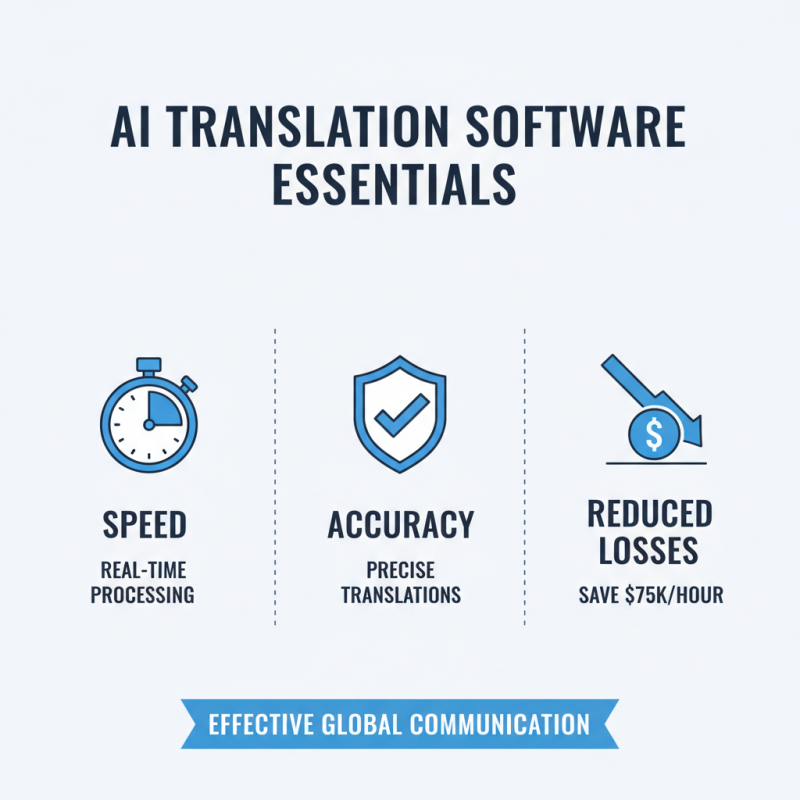
In today's global marketplace, effective communication is vital. When selecting AI translation software, certain features stand out as essential. Speed and accuracy are crucial. Reports indicate that businesses lose about $75,000 per hour due to communication barriers. Therefore, a reliable tool must deliver fast and precise translations, reducing downtime with real-time processing capabilities.
Another important aspect is language support. With over 7,000 languages spoken globally, tools should cater to a wide range. Some reports suggest that multilingual communication boosts sales by 25% in international markets. Users often miss out on these opportunities if the software lacks diverse language options.
Furthermore, user-friendliness is key. Complex interfaces deter users, causing them to seek alternatives. Many AI tools are not intuitive, which can lead to mistakes. On the other hand, a simple design promotes efficient use. Despite advancements, AI translation often struggles with context, idioms, and cultural nuances. Enhanced contextual understanding remains a challenge. Users need to remain cautious and review translations to ensure accuracy.
Top AI Translation Software Options Available Today
In today's globalized world, effective communication is vital. Various AI translation software options are transforming how we connect across languages. Recent reports indicate a significant rise in the demand for these tools. Approximately 70% of businesses report that effective language solutions enhance customer satisfaction.
AI translation software utilizes advanced algorithms to provide quick translations. However, some nuances may be lost during the process. For instance, idiomatic expressions or cultural references can often lead to misunderstandings. According to a survey, up to 20% of users encounter dissatisfaction with translations during crucial discussions. This signals a need for continuous improvement.
Moreover, many companies still underestimate the importance of localization. Machine translations can miss the mark entirely when it comes to context and specific terminology. In some cases, quality could compromise professional relationships. Companies should assess their translation needs thoroughly, balancing speed and accuracy. Investing in software that emphasizes these aspects can result in smoother communication. The landscape of AI translation continues to evolve, but challenges remain.
Comparative Analysis of Leading AI Translation Platforms
AI translation software has transformed global communication. A recent report highlighted that over 75% of businesses now rely on AI tools for translation tasks. These platforms offer various features, including text, voice, and image translations. However, accuracy remains a challenge. While many tools boast 90% accuracy rates, nuances in language can still lead to misunderstandings. For instance, idiomatic expressions often get lost in translation.
In addition, user experience varies. Some translators provide a seamless interface, while others can be cumbersome. A study showed that 40% of users found certain platforms difficult to navigate, which may hinder effective communication. Moreover, the context is crucial. AI struggles with context-dependent sentences, sometimes resulting in awkward phrasing. Users must remain vigilant and review translations, especially in critical situations. While AI translation tools enhance efficiency, this innovation still requires careful human oversight to prevent errors.
Future Trends in AI Translation Technology and Communication
The future of AI translation technology holds promise for seamless global communication. As algorithms improve, translation accuracy will become more intuitive and natural. Real-time translation may soon allow people from different countries to converse effortlessly. Think about how this will revolutionize business meetings and personal interactions.
However, challenges remain. Variations in dialects and cultural nuances can lead to misunderstandings. Sometimes, a simple word carries deep meaning in one context but not in another. This complexity can hinder genuine communication. It’s crucial to recognize that while technology progresses, human oversight is still essential. Misinterpretations are possible, especially in sensitive topics.
**Tips:** Always clarify your main points when using translations. It helps prevent confusion. Also, take note of idiomatic expressions that may not translate directly. You may need to explain these in simpler terms. Collaboration between tech and human insight is key for future advancements. Focus on creating tools that enhance understanding, rather than relying solely on machines.
Worldwide AI Translation Software Usage Trends
.svg)


.svg)

.svg)


 052925 - AI Translation 101 (1).png)


.svg)

.svg)


.jpg)