2026 Top Trends in Translation Management Systems You Should Know?
In the rapidly evolving landscape of language services, the role of a translation management system (TMS) has never been more crucial. As globalization expands, companies seek efficient solutions to manage their multilingual content. According to Dr. Emma Li, a noted expert in translation technology, "A robust translation management system is the backbone of successful international communication." This statement emphasizes the importance of TMS in breaking down language barriers.
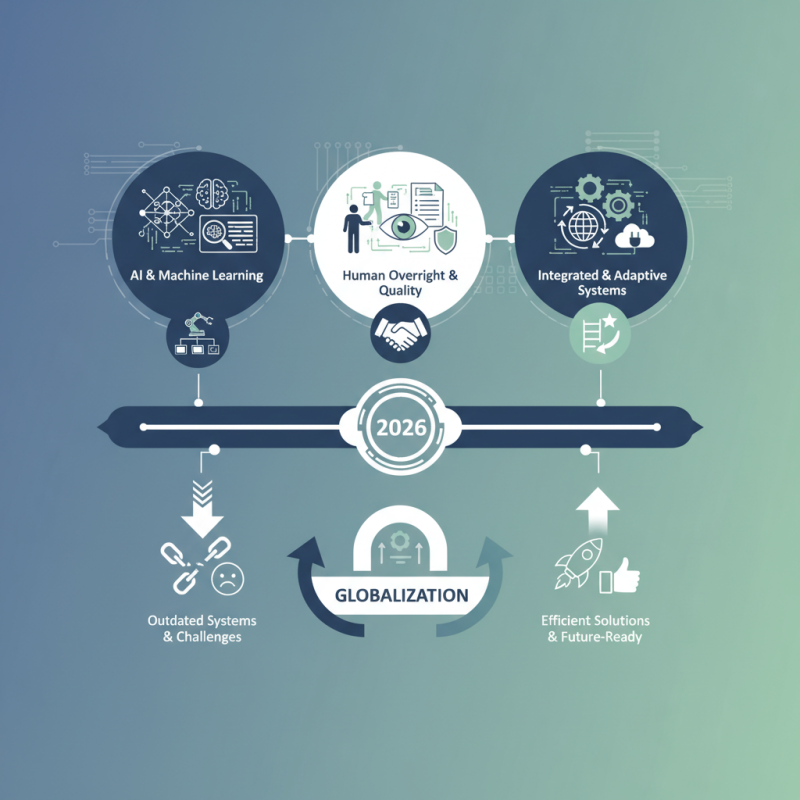
However, the integration of TMS is not without challenges. Many organizations struggle with outdated systems that cannot adapt to new technologies. This leads to inefficiencies and potential miscommunications in translation processes. The need for innovation is paramount, as companies must keep up with emerging trends to remain competitive in the market.
Looking ahead to 2026, several trends are poised to reshape translation management systems. The incorporation of AI and machine learning will revolutionize workflows. Yet, companies must balance these advancements with human oversight to ensure quality. A thoughtful approach is necessary to maximize the benefits of a translation management system while avoiding common pitfalls.
Emerging Technologies Shaping Translation Management Systems in 2026
In 2026, emerging technologies are revolutionizing Translation Management Systems (TMS).
Automation is at the forefront, streamlining translation workflows and enhancing efficiency.
A report from the Global Language Services Market indicates that companies utilizing automated solutions experience a
30% reduction in turnaround time. This has profound implications for businesses looking to expand globally.
Artificial Intelligence (AI) is also playing a critical role. Neural machine translation (NMT) has become more sophisticated, enabling higher accuracy in translations.
According to recent studies, NMT can outperform traditional methods by up to 60% in specific languages. However, relying solely on AI raises concerns about context and cultural nuances.
There is a risk of losing the human touch in translation, which can affect the quality of communication.
Cloud-based solutions are becoming essential. They offer flexibility and facilitate collaboration among teams across different regions.
Yet, security issues must be addressed. The Interdependence of various digital platforms can lead to vulnerabilities if not managed correctly.
Companies need to be aware of these risks while embracing innovation in their translation processes.
Integration of Artificial Intelligence in Translation Management
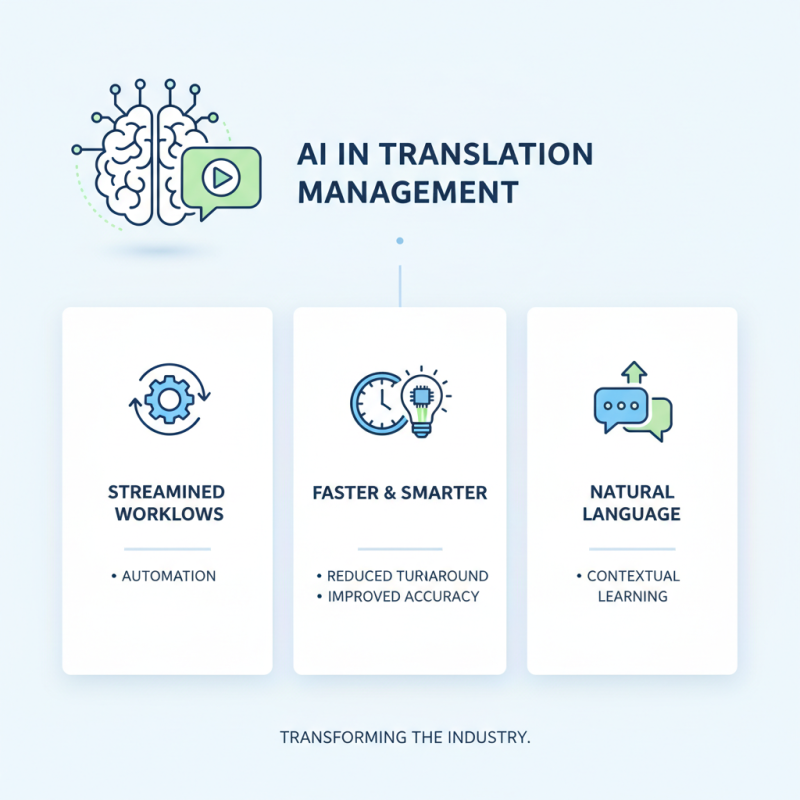
The integration of artificial intelligence in translation management systems is transforming the industry. By utilizing AI, these systems can streamline workflows, reduce turnaround times, and enhance accuracy. Machine learning algorithms can analyze vast amounts of data, enabling them to learn from context and improve translations over time. This leads to more natural and fluent results.
However, relying on AI isn't without its challenges. The technology can sometimes misinterpret nuanced phrases or cultural references. Each language has its intricacies that machines may overlook. Human translators still play a crucial role in ensuring quality and maintaining the emotional tone of the content. It's essential to strike a balance between leveraging technology and preserving the human touch in translation.
Incorporating AI tools requires careful planning. Organizations must evaluate their existing processes and determine how AI can complement human efforts. There's always a risk of over-dependence on technology, which could lead to errors and misunderstandings. As we embrace these advancements, ongoing training for translators alongside AI support becomes vital for achieving the best results.
User-Centric Features for Enhanced Translation Workflow Efficiency
User-centric features are shaping the future of translation management systems. These innovations streamline workflows, enabling translators to focus on what truly matters. Intuitive interfaces allow for better navigation, reducing time spent on administrative tasks. Advanced tagging systems help manage content efficiently, yet can be misunderstood by new users. Some features even require training sessions for optimal use.
Customization is essential as each team has unique needs. Flexible workspaces help users organize their tasks according to personal preferences. However, powerful tools can overwhelm users. Simplicity must coexist with functionality. Collaborative features make real-time editing smooth but may lead to confusion without proper guidelines. Not every team is equipped to handle a fully collaborative environment.
Robust analytics tools track performance and give valuable insights. Yet, many users might find data overload daunting. Striking a balance between data richness and simplicity is vital. Taking user feedback seriously can help refine these systems. Continuous iteration and adaptation are necessary for true user-centric design.
2026 Trends in Translation Management Systems
The following chart demonstrates the anticipated top user-centric features that are expected to enhance efficiency in translation workflows by 2026. The data reflects the percentage of users who find each feature essential for their translation management system.
Data Security and Privacy Trends in Translation Management Systems
Data security and privacy are critical concerns in translation management systems. With the rise of digital communication, sensitive information is frequently exchanged. Translation professionals often handle documents containing personal data, proprietary content, and confidential agreements. Protecting this information is essential.
Many translation management systems are adopting advanced encryption methods. These methods safeguard data both in transit and at rest. However, not all systems are created equal. Some may lag in implementing robust security measures. Organizations must evaluate their tools to ensure they meet current standards.
Moreover, privacy regulations are tightening globally. Compliance with GDPR and other frameworks is crucial for companies operating in multiple regions. Yet, some translation teams may lack awareness of these laws. This oversight can lead to unintentional breaches, which damage trust. Training is necessary, but where to start? Balancing security and daily workflow remains a challenging task.
The Impact of Globalization on Translation Management Strategies
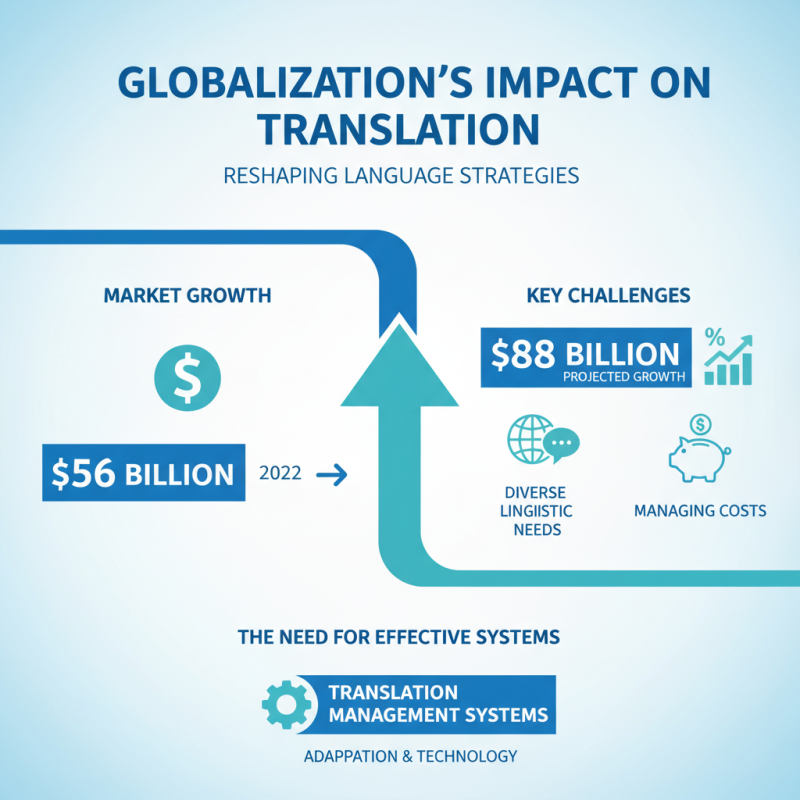
Globalization has dramatically reshaped translation management strategies. In 2022, the Language Services Market was valued at over $56 billion and is projected to grow to $88 billion by 2027. This growth emphasizes the increasing need for effective translation management systems. Organizations must adapt their strategies to meet diverse linguistic needs while managing costs.
However, challenges remain. Many companies struggle with integrating technology and human expertise seamlessly. A 2023 study revealed that 78% of organizations reported difficulties in real-time collaboration between teams. Despite having advanced tools, some still face bottlenecks that hinder efficiency. The quest for quality translation often leads to trade-offs between speed and accuracy, leaving room for improvement.
As businesses expand globally, cultural nuances become crucial. Recognizing these subtleties can enhance customer engagement. Yet, many organizations still overlook the importance of localized strategies. Reports indicate that 65% of customers prefer content in their native language. It's evident that aligning translation practices with cultural context can create significant advantages. However, organizations often find this alignment challenging, highlighting a gap that needs to be addressed.
.svg)


.svg)

.svg)


 052925 - AI Translation 101 (1).png)


.svg)

.svg)


.jpg)