Why You Need Translation Management Software for Your Business Growth?
In today's global marketplace, businesses must effectively communicate across languages and cultures. After all, clear communication drives growth. As Tom O’Connell, a leading expert in translation management software, states, "Language barriers should not hinder business objectives."
Translation management software is essential for streamlining the translation process. It allows businesses to manage multilingual content efficiently. This software simplifies tasks such as translation memory, glossary management, and collaboration. Without it, organizations may struggle with inconsistency and delays.
Many companies overlook the importance of investing in translation management software. They fail to realize the competitive edge it can provide. Effective communication can open doors to new markets and enhance customer relationships. Upholding quality and speed in translation is vital in today’s fast-paced world. Ignoring this aspect is a missed opportunity for growth.

The Importance of Effective Communication in Global Markets
In today's global market, effective communication is crucial for success. Language barriers can create misunderstandings and lost opportunities. Companies that expand internationally face unique challenges. They must convey their message clearly to diverse audiences. This is where translation management software comes into play.
Using this software helps streamline translations. It makes it easier to manage multilingual content. Centralized tools enhance collaboration between teams. Companies often underestimate the impact of quality translations. Poorly translated content can damage a brand's reputation. Mistakes in translation might lead to confusion. Businesses must reflect on how they communicate in different cultures.
Companies should not assume that one size fits all. Cultural nuances matter significantly in translations. Effective communication involves more than just words. It requires understanding context and audience. This part is often overlooked. Investing in translation management software may reveal hidden insights.
It promotes better engagement and connection with global customers. However, it’s essential to review the effectiveness of translations regularly. Without reflection, progress may stall.
Challenges of Managing Multilingual Content for Businesses
Managing multilingual content poses significant challenges for businesses aiming for global reach. According to a survey by Common Sense Advisory, over 75% of consumers prefer to purchase products in their native language. Yet, many companies struggle to create and maintain accurate translations. This is often due to decentralized processes and inconsistent terminology. A lack of standardized guidelines can lead to discrepancies in messaging.
Adopting Translation Management Software can streamline these processes. It offers features such as automated workflows and collaboration tools. These tools help ensure brand consistency. A recent report from CSA Research indicates that companies that invest in translation management systems see a 30% increase in efficiency. This efficiency translates into quicker market entry, allowing businesses to scale effectively.
Tip: Choose a platform that integrates with your existing systems. This can reduce friction in your workflow. Automate routine tasks to focus on quality. Addressing translation quality early on can prevent costly rework later. Businesses should regularly evaluate their translation strategies. Continuous improvement is essential to stay relevant in diverse markets.
Key Features of Translation Management Software
Translation management software plays a crucial role in streamlining multilingual projects. One key feature is centralized project management. This allows teams to oversee all translations in one place. With everything organized, it reduces confusion. Teams can track progress and deadlines more effectively.
Collaboration tools are another essential feature. They enable translators and reviewers to work together seamlessly. Instant messaging and shared documents make real-time feedback possible. This improves the quality of translations. Fast communication can prevent costly mistakes.
However, not all software is user-friendly. Some tools require extensive training. This can slow down onboarding. Organizations might struggle to adapt, limiting their efficiency. Regular reflections on software usage can provide insight. Identifying issues early can lead to better productivity in the long run.
Importance of Translation Management Software for Business Growth
How Translation Management Software Supports Business Scalability
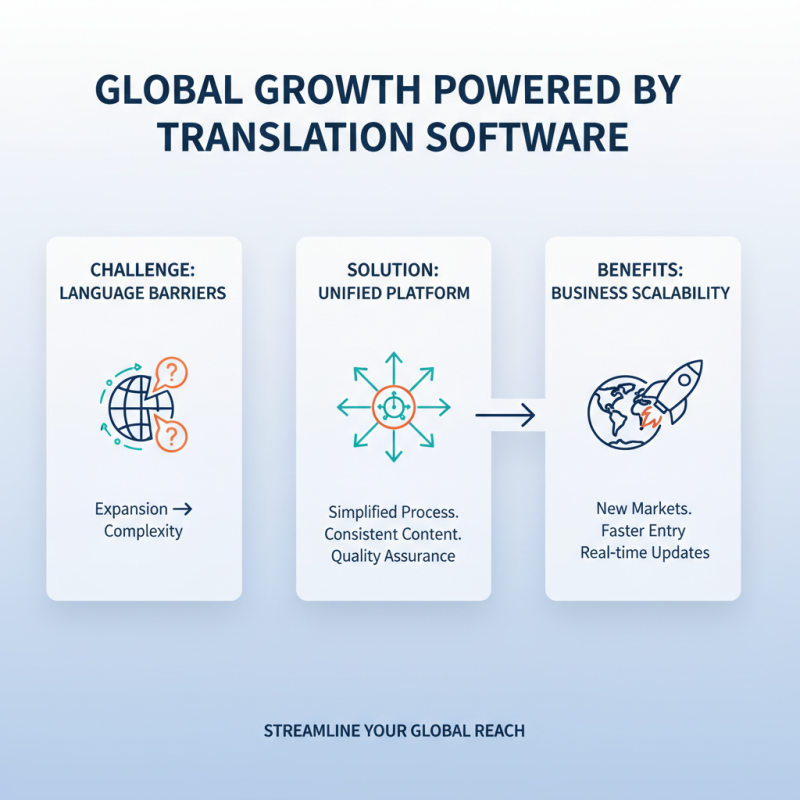
Translation management software plays a crucial role in business scalability. As companies expand, they often face language barriers. A unified platform simplifies the translation process, ensuring all content is consistent and accurate. This tool helps businesses reach new markets quickly. With real-time updates, teams remain informed on project statuses.
Managing multiple languages manually can lead to errors. It is inefficient and time-consuming. Translation management software eliminates these challenges. It organizes projects, assigns tasks, and tracks progress seamlessly. This enhances collaboration among team members, even across different time zones.
Businesses can focus on growth rather than logistics. The software allows for smoother workflows. Inconsistencies in messaging can frustrate customers. By reducing these issues, companies can improve their global presence. Ultimately, investing in translation management eases the path to scalability. It fosters a more connected and effective enterprise.
Real-World Success Stories: Businesses Boosted by Translation Tools
In today’s global market, translation management software can be a game changer. Many businesses have found growth through effective communication. For instance, a mid-sized online retailer expanded into Europe. They used translation tools to localize their website. In just six months, their sales doubled in the new markets. This success illustrates the power of reaching customers in their native languages.
Another company, a tech startup, faced challenges in entering Asian markets. They struggled with language barriers and cultural nuances. By adopting a translation management system, they streamlined their content adaptation. Their marketing campaigns became more relatable. Customer engagement increased significantly. However, they initially underestimated the time needed for quality translations. Reflection led them to improve their processes.
Translation tools also help in ensuring consistency across various platforms. A financial services firm learned this the hard way. Early in their expansion, they used different translators for different content. This resulted in mixed messages and confusion. Once they standardized their translation approach, they saw a marked improvement. Clients appreciated the clarity and professionalism. These stories show that growth often requires learning from missteps and embracing effective translation solutions.
.svg)


.svg)

.svg)


 052925 - AI Translation 101 (1).png)


.svg)

.svg)


.jpg)