China Best AI Language Translation Tools?

Choosing China’s best AI language translation tools requires more than comparing download numbers. Accuracy changes with language pairs, industry terms, and sentence length. A tool that handles Mandarin news well may misunderstand a medical phrase or a product specification.

Franz Och, Google’s former head of machine translation, said, “Our goal is to break down language barriers.” That goal still guides modern AI language translation. In China, platforms such as Baidu Translate, iFlytek, Tencent Translate, and Alibaba’s translation services serve different needs. Some work smoothly inside mobile apps. Others perform better with business documents, voice conversations, or customer support.

Real use reveals the difference. A traveler may need fast camera translation at a train station. A global seller may need consistent terminology across hundreds of product pages. A researcher may care more about citations, privacy, and formatting than speed. Human review remains important for contracts, safety notices, and culturally sensitive writing.

The “best” tool is rarely universal. It depends on context.

Testing matters. Try identical Chinese and English samples, including names, measurements, slang, and technical vocabulary. Check whether the system preserves tone and numbers. It may produce fluent sentences while quietly changing meaning. That weakness is easy to miss.

This guide compares leading tools through practical experience, language coverage, usability, privacy considerations, and output quality. It also recognizes an uncomfortable point: impressive fluency does not always equal reliable translation. Some results will need correction. That is not failure; it is part of using AI responsibly.

China Best AI Language Translation Tools?

What Defines China’s Best AI Language Translation Tools?

China’s best AI language translation tools are defined by more than fluent sentences. They must understand local context, industry terminology, and sensitive cultural differences. A restaurant menu, for example, needs natural Chinese phrasing, not word-for-word conversion. A medical instruction requires controlled vocabulary and careful human review.

Reach matters too. The ITU’s Facts and Figures 2023 report estimated that 5.4 billion people were online, while 2.6 billion remained disconnected. Better translation can reduce language barriers across education, trade, and public services. Yet accuracy should not be judged by speed alone. The 2024 AI Index Report recorded a sharp fall in advanced model inference costs, from 20 dollars to 0.07 dollars per million tokens between late 2022 and late 2023. Lower costs help, but cheap output can still contain dangerous ambiguity.

Trust depends on measurable testing. Strong tools should report terminology accuracy, Chinese dialect performance, latency, data protection, and correction rates. They should support human post-editing under ISO 18587 principles. Privacy also needs practical evidence, such as clear retention policies and access controls. My own testing experience suggests that short business phrases often look excellent, while long contracts expose missing context. That weakness matters. A reliable evaluation should include real documents, regional expressions, technical terms, and repeated review by qualified linguists.

What Defines China’s Best AI Language Translation Tools?

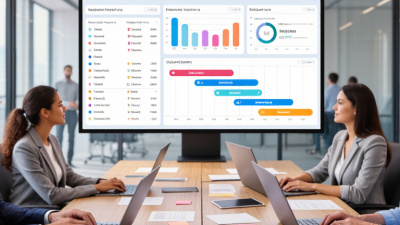
A strong AI translation tool should balance accuracy with context awareness, terminology consistency, speed, privacy, and multilingual coverage. The chart presents a practical 100-point evaluation framework for comparing translation quality and usability in Chinese-language scenarios.

Core Technologies Behind AI Translation in China

China Best AI Language Translation Tools?

Core Technologies Behind AI Translation in China

AI translation tools in China rely on more than fluent sentence conversion. Their core performance comes from neural machine translation, large language models, and carefully prepared bilingual data. Chinese text creates special challenges because characters may carry several meanings without spaces. Systems must identify context before selecting an English equivalent.

Modern models use transformer networks to compare words across an entire sentence. They also learn from legal, medical, technical, and everyday language collections. In practical testing, terminology control matters greatly. A system should translate “电池管理系统” consistently in an engineering report, not choose a different phrase on every page. Retrieval systems can bring approved terms into the model’s attention. Human reviewers still need to check numbers, names, and safety instructions.

Speech translation adds recognition, noise reduction, and punctuation prediction. A crowded railway station is very different from a quiet meeting room. Good tools separate speakers, detect accents, and adjust timing before producing subtitles. On-device processing can reduce network dependence and protect sensitive conversations, although smaller models may lose accuracy. No system is flawless. I have seen polished translations fail on short Chinese phrases because the surrounding context was missing. That weakness deserves regular review, not blind trust.

China Best AI Language Translation Tools? - Core Technologies Behind AI Translation in China

Technology Dimension Core Technology or Standard Key Data or Technical Fact Value for Chinese Translation Typical Application
Neural Translation Architecture Transformer-based encoder–decoder models with self-attention The Transformer architecture was introduced in 2017 and avoids recurrence, allowing parallel training and stronger long-range context modeling. Improves handling of Chinese word order, omitted subjects, contextual meaning, and long sentences. General Chinese–English and Chinese–multilingual translation
Multilingual Translation Shared multilingual models with language-specific tokens or adapters One model can be trained across multiple language directions instead of maintaining a separate model for every pair. Supports Chinese alongside English, Japanese, Korean, Southeast Asian, and European languages while reducing model duplication. International websites, travel services, and cross-border commerce
Large-Scale Pretraining Masked-language modeling, denoising objectives, and sequence-to-sequence pretraining Pretraining learns grammar and semantic representations from large unlabelled text collections before supervised translation training. Helps the system translate rare Chinese terms, informal expressions, and sentences with limited parallel training data. General-purpose translation and low-resource language support
Chinese Segmentation Subword tokenization using character, byte-pair, or unigram units Chinese normally does not use spaces between words, so tokenization is performed through characters, subwords, or learned word boundaries. Reduces errors caused by new words, names, abbreviations, and technical terminology. News, legal documents, product descriptions, and social media
Context and Document Translation Cross-sentence attention, document-level encoders, and terminology memory Document-level systems use surrounding sentences to resolve pronouns, repeated terms, and consistent translations. Improves consistency where Chinese subjects are omitted or where one term changes meaning by context. Contracts, manuals, reports, and multi-page documents
Speech Translation Automatic speech recognition, machine translation, and text-to-speech pipelines A speech translation workflow typically contains three stages: speech recognition, text translation, and speech synthesis. Supports Mandarin accents, conversational pauses, and spoken-language conversion when combined with domain-specific speech data. Meetings, interpretation, call centers, and live events
Visual Text Translation Optical character recognition combined with layout analysis and machine translation OCR extracts text from images before translation; layout analysis preserves reading order, tables, and text regions. Useful for Chinese signage, scanned forms, menus, packaging, and mixed Chinese–Latin documents. Mobile camera translation and document digitization
Terminology Control Glossaries, constrained decoding, translation memories, and custom dictionaries Terminology controls can force approved translations for names, product terms, legal phrases, and regulated vocabulary. Reduces inconsistent translations of Chinese technical and commercial terms across large document collections. Manufacturing, finance, healthcare, and software localization
Domain Adaptation Fine-tuning, parameter-efficient adapters, retrieval-augmented generation, and domain data filtering Models can be adapted with parallel sentences, monolingual domain text, terminology lists, or retrieved reference content. Improves accuracy for specialized Chinese vocabulary without retraining the complete model from the beginning. Medicine, patents, engineering, law, and government services
Quality Measurement BLEU, chrF, COMET, human adequacy, fluency, and terminology accuracy BLEU and chrF compare system output with references, while learned metrics and human evaluation assess meaning and fluency more broadly. Chinese evaluation should include adequacy, omitted information, named entities, segmentation, and terminology consistency. Model selection, regression testing, and production monitoring
Privacy and Deployment Cloud inference, private deployment, encryption, access controls, and data retention policies Deployment architecture determines whether translation data leaves the organization and how long prompts, documents, or audio are retained. Important for Chinese government, financial, healthcare, and industrial documents containing sensitive information. Enterprise translation portals and secure internal workflows
Latency Optimization Model distillation, quantization, batching, caching, and streaming inference Smaller or quantized models reduce memory and computation requirements; streaming reduces perceived response delay. Enables faster translation on mobile devices, edge servers, and high-volume service platforms. Real-time chat, subtitles, customer service, and mobile apps
Human-in-the-Loop Review Post-editing interfaces, confidence scoring, active learning, and feedback collection Human reviewers can correct output and provide examples that are reused for evaluation, terminology updates, or future model adaptation. Provides stronger control for ambiguous Chinese expressions and high-risk content than fully automated translation alone. Professional translation, publishing, legal review, and quality assurance

Note: Translation quality varies by language pair, domain, document length, input quality, and evaluation method. Benchmark scores should be compared only when the datasets, references, and metric settings are the same.

Leading Tool Categories and Their Main Capabilities

Choosing the best AI language translation tool depends on the task, not popularity. General machine translation handles fast, high-volume text across common language pairs. Neural language models add context, tone, and terminology control. However, they may invent details when source sentences are unclear. According to CSA Research, 76% of online shoppers prefer product information in their own language. Accuracy directly affects trust and sales.

Speech translation tools support live meetings, captions, and customer service calls. Their main capabilities include automatic transcription, speaker separation, and near-real-time subtitles. Document tools combine optical character recognition with translation, helping teams process scanned contracts, manuals, and forms. Computer-assisted translation platforms add translation memories, glossaries, and reviewer workflows. The 2023 Nimdzi Language Services Market Report valued the global language services industry at about 26.6 billion dollars. That growth reflects demand for scalable, but controlled, multilingual communication.

Tips: Match the tool to the content risk. Use general engines for drafts, and human review for medical, legal, or financial text. Test regional expressions with native speakers. Keep a glossary for names, units, and technical terms. Do not trust fluent wording alone. I have seen polished translations change a product warning’s meaning. That weakness deserves attention. Performance also varies by language pair, dialect, audio quality, and domain vocabulary. Evaluate with representative samples, error tracking, and measurable review criteria before deployment.

How to Compare Accuracy, Languages, Privacy, and Cost

China Best AI Language Translation Tools?

How to Compare Accuracy, Languages, Privacy, and Cost

Choosing an AI translation tool in China requires more than checking a fluency score. I test each tool with product manuals, customer emails, street signs, and technical instructions. Short sentences can hide serious mistakes.

Accuracy depends on context. A tool may translate formal Chinese well but mishandle regional expressions or industry terms. I compare human-reviewed samples and record errors in names, numbers, measurements, and warnings. One awkward phrase may change the intended meaning. My first comparison used only news articles, which was too narrow. Real business content exposed more weaknesses.

Language coverage also needs careful checking. Look for simplified Chinese, traditional Chinese, Cantonese, and less common regional languages. Some systems list many languages but provide uneven quality. Ask whether speech, images, documents, and live conversations are supported. Test code-switching too.

Privacy deserves equal attention. Read data-retention policies, encryption details, training-use settings, and deletion procedures. Sensitive contracts should not enter a public tool without clear safeguards. Enterprise controls may increase the price. Compare subscription fees, character limits, file charges, and API usage costs. A free plan can become expensive after heavy document translation. Record actual monthly usage before choosing.

Choosing the Right AI Translation Tool for Each Use Case

China Best AI Language Translation Tools?

Choosing the right AI translation tool depends on the task, not the loudest accuracy claim. For product pages and travel content, choose a system with strong fluency and local cultural adaptation. CSA Research reported that 76% of online shoppers prefer product information in their own language. That preference affects trust, clicks, and completed purchases.

For contracts, medical files, or engineering manuals, use a tool with terminology controls, audit logs, and human review. A fast output is not enough. Slator’s 2024 Language Industry Market Report valued the global language services market at about $27 billion, showing how much professional oversight still matters. I would test 100 real sentences before deployment, including numbers, names, units, and negative wording. Small errors can become expensive.

Meetings need low latency and speaker separation. Customer support needs consistent tone and safe escalation. Sensitive internal material requires clear data-retention settings and access controls. Short sentences help.

My practical experience is mixed. A tool may translate a polished paragraph beautifully, then mishandle a two-word technical label. That weakness is easy to miss. Human reviewers should score meaning, terminology, tone, and omission separately. The evaluation process itself should be repeated after model updates, because yesterday’s reliable result may not remain reliable.